

Table of Contents
Introduction
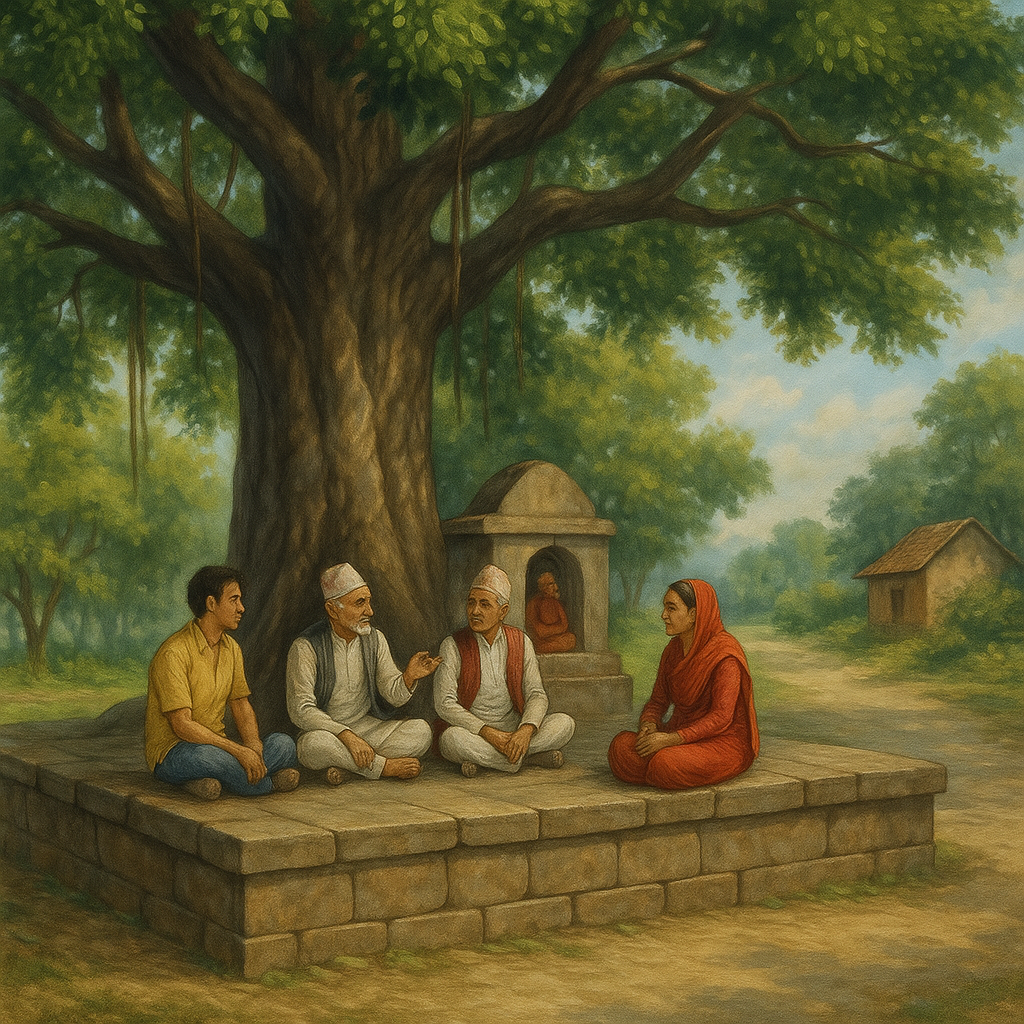
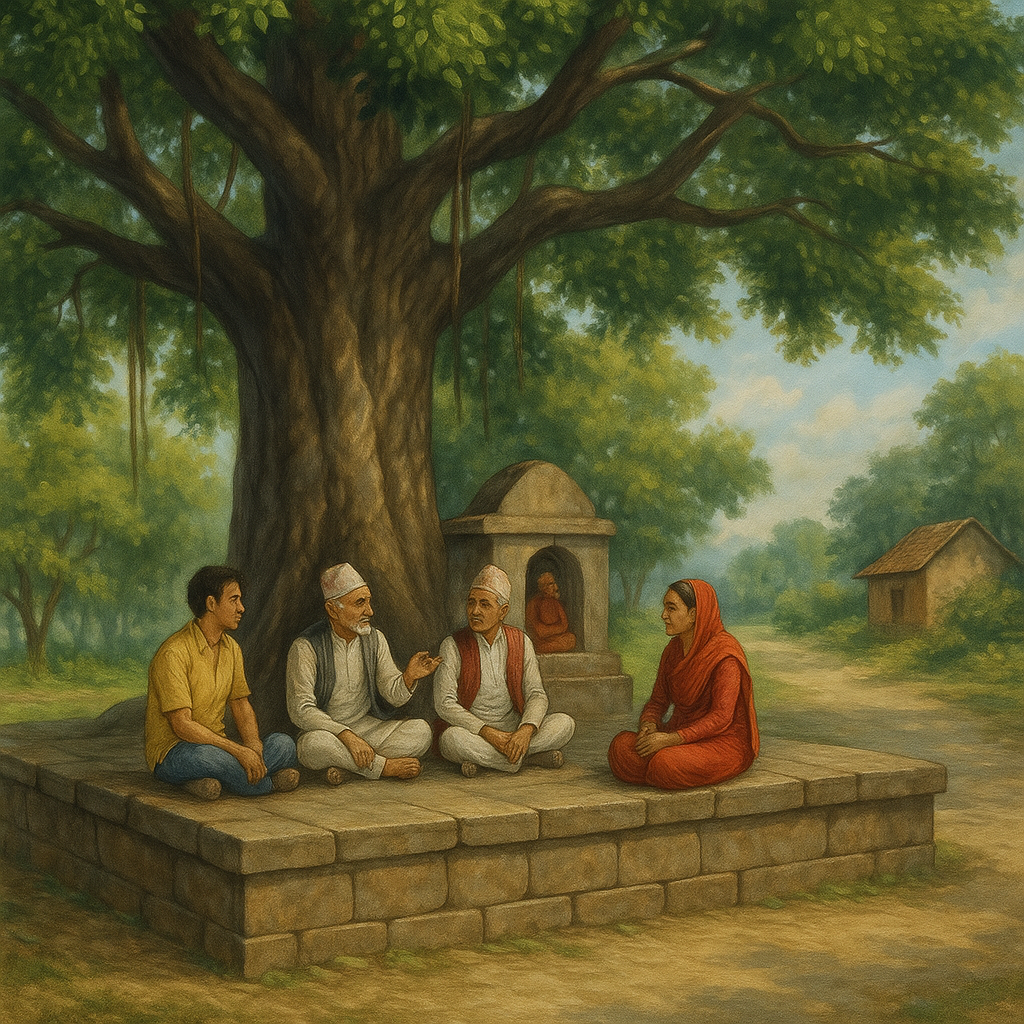
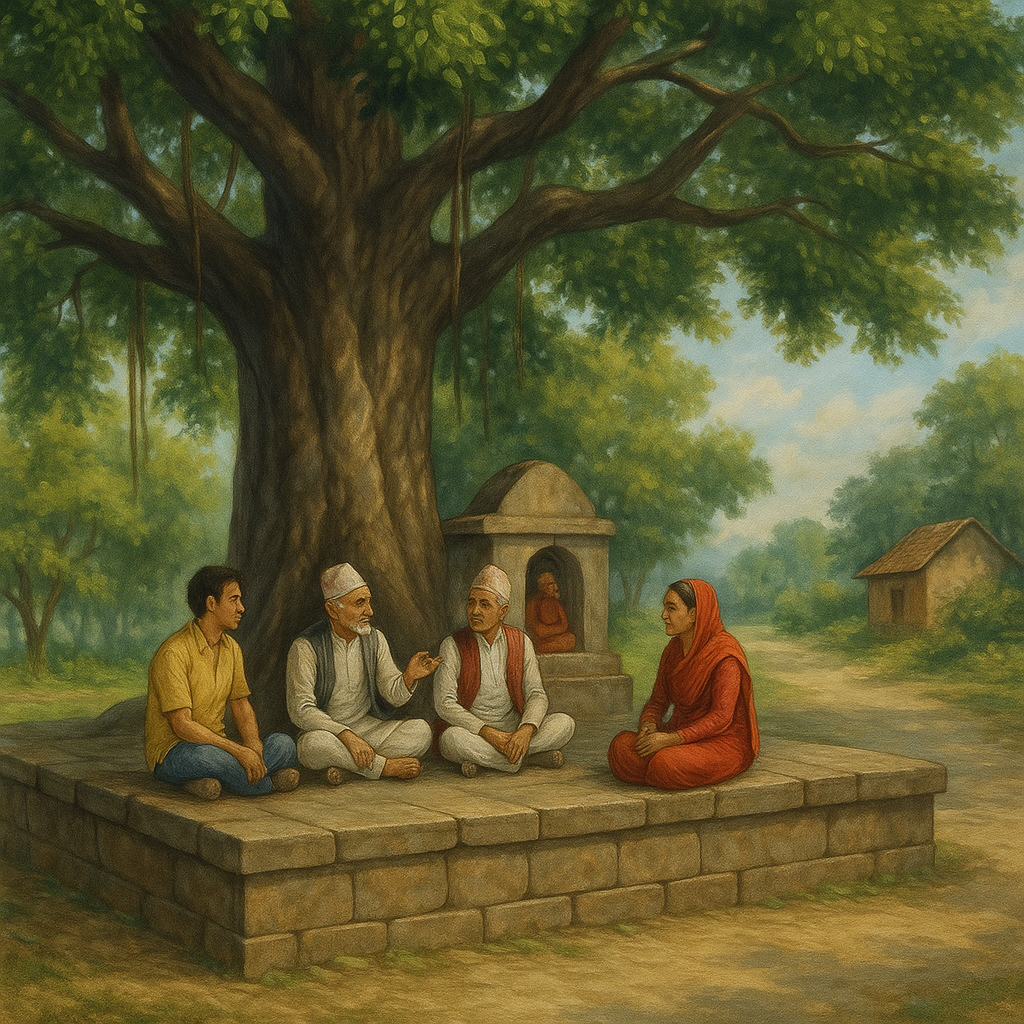
A Chautari is not just a resting place; it is a living monument of Nepali culture, social harmony, and environmental wisdom. Traditionally found in villages and along travel routes, a chautari is a platform built around or under large trees like Peepal or Bar, offering travelers and locals a place to rest, converse, and connect.
Historical Origins
The concept of the chautari dates back to ancient times when people traveled long distances on foot. To rest and recover from fatigue, these platforms were built along trails and village roads, often under shade-giving trees. Over time, they became essential components of community life.
Social Significance
Chautaris served as informal gathering spaces for villagers, especially elders, who shared stories, wisdom, and discussed daily life.
They were platforms for community decision-making, conflict resolution, and even marriage negotiations.
For younger generations, chautaris functioned as “open schools” where life values and cultural norms were passed down.
It was a space that transcended caste, age, and background—fostering inclusivity and mutual respect.
Cultural Importance
Chautaris often held religious significance and were sometimes dedicated to local deities or spirits.
They were venues for cultural expression—songs, folk tales, bhajans (devotional songs), and storytelling.
Festivals and rituals sometimes centered around the chautari, turning it into a sacred space of community celebration.
Environmental Perspective
Trees planted around chautaris supported biodiversity, provided shade, and maintained local ecological balance.
They played a role in water conservation and protected surrounding soil from erosion.
These green spots enhanced the beauty and serenity of rural settlements.
Decline Amid Modernization
With urbanization and road expansion, many chautaris have been demolished or neglected:
Widening roads and new infrastructure projects often disregard the cultural and environmental value of chautaris.
The rise of digital life has reduced face-to-face social interaction, especially among youth.
As a result, modern generations are growing up unaware of the chautari’s significance.
Revival and Preservation
Local governments and communities need to initiate efforts for restoring and preserving chautaris.
Including chautari-related themes in school curriculums can instill awareness from a young age.
Modernized chautaris can still serve as green resting spaces and community dialogue platforms in both rural and urban settings.
Conclusion
A chautari is more than a stone platform—it is a living symbol of Nepal’s cultural depth, communal harmony, and environmental consciousness. Preserving chautari is an act of safeguarding our identity, our values, and our connection to nature. It is time to revive and integrate these heritage sites into our evolving lifestyle for the benefit of future generations.
The Importance of Walking Journeys and Chautari
In a country like Nepal, with its mountainous terrain and rural lifestyle, walking journeys (paidal yatra) and chautaris (traditional resting platforms under trees) are more than just a means of travel or places to rest—they are reflections of lifestyle, culture, community, health, and our bond with nature. This essay explores the multifaceted significance of walking journeys and chautaris from historical, cultural, health, social, and environmental perspectives.
Historical and Cultural Significance of Walking Journeys
Walking has been the most ancient form of human travel. In Nepal, ancient highways, pilgrimage routes, and trade paths were all navigated on foot. Scholars, healers, saints, traders, and common travelers walked long distances, deepening their connection with the land, people, languages, and traditions along the way. It fostered experiential learning and inter-community relationships.
Health Benefits of Walking
Physical Health
Walking regularly helps prevent and manage lifestyle diseases such as heart problems, obesity, diabetes, and hypertension.
Mental Wellbeing
Walking in nature, especially during the serene early hours, brings mental clarity, reduces stress, and enhances mindfulness.
Ayurveda Viewpoint
According to Ayurveda, walking is an excellent way to balance Vata dosha. Morning walks in fresh air enhance mental clarity and increase sattva guna (purity and stability of mind).
Social Benefits of Walking
Walking from village to village or from one community to another nurtures human connection. People meet, exchange stories, share emotions, and build compassion and cooperation. It fosters social harmony and a sense of belonging—something that mechanized travel often lacks.
Chautari : More Than a Rest Stop
A chautari is a resting platform often built under large trees along walking trails. While it serves as a place for travelers to rest, its importance goes much deeper:
Sociological Importance: Chautaris are traditional social hubs where elders, farmers, and youth gather for discussions and decisions on community matters.
Cultural Preservation: Oral literature, folk tales, songs, riddles, and customs were shared and passed down in these spaces.
Nature and Environment: Chautaris were traditionally built around trees, encouraging greenery and contributing to local biodiversity.
The Decline in Modern Times
With the rise of roads, vehicles, and digital communication, walking journeys are becoming rare, and chautaris are disappearing. This has resulted in:
A decline in physical and mental health
Weakening of social connections
Loss of experiential learning and cultural transmission for younger generations
Revival and Solutions
Policy Promotion of Walking: Institutions can promote walking to schools, offices, and places of worship through awareness and policy.
Community-Based Chautari Revival: Local governments and communities should work together to rebuild and maintain chautaris.
Education: The importance of walking and chautaris should be incorporated into school curricula to preserve this heritage.
Conclusion
Walking journeys and chautari are not relics of the past—they are living philosophies and practical traditions rooted in well-being, wisdom, and community. In today’s fast-paced and technology-driven world, reviving these traditional practices is essential for holistic development—physical, emotional, social, and environmental. They are simple yet profound ways to reconnect with ourselves, with others, and with nature.
The Tradition of Planting Banyan, Peepal, and Shami Trees at Chautari and Their Scientific Significance
Introduction
In the rural culture of Nepal, a chautara is not merely a resting place—it holds immense social, religious, and environmental significance. Usually constructed at road junctions, near temples, or village centers, these platforms are traditionally shaded by sacred trees like Banyan (Bar), Peepal, and Shami. The practice of planting these trees is deeply rooted in cultural traditions, spiritual symbolism, and ecological awareness.
Religious and Cultural Background
Banyan (Ficus benghalensis)
The banyan tree, often referred to as Akshaya Vat (the eternal tree), symbolizes longevity and wisdom. In Hindu culture, it represents Lord Brahma. Married women observe the Vat Savitri Vrat, fasting and praying under the banyan tree for their husband’s longevity.
Peepal (Ficus religiosa)
The Peepal tree is associated with Lord Vishnu and also with Buddha’s enlightenment (under the Bodhi tree). In the Bhagavad Gita, Lord Krishna declares, “Among trees, I am the Ashvattha (Peepal tree).” The tree is considered sacred and is never cut down.
Shami (Prosopis cineraria)
The Shami tree symbolizes valor, forgiveness, and prosperity. In the Mahabharata, the Pandavas hid their weapons in a Shami tree during exile. On Vijayadashami (Dashain), people worship Shami as a tree of victory.
Social Significance
Chautaras served as vital meeting points for villagers—a space to rest, share conversations, and build social bonds. The presence of large trees enhanced these communal interactions, fostering peace, hospitality, and a sense of belonging.
Environmental Benefits
Scientific Significance
Peepal and Banyan are among the few trees that release oxygen even at night (via CAM/C4 photosynthesis), helping purify air continuously.
Shami grows in arid climates, prevents soil erosion, and enhances soil fertility, making it ecologically vital for dry regions.
Biodiversity Support
These trees provide shelter and food for birds, squirrels, insects, and other wildlife. Their large canopies support micro-ecosystems that promote biodiversity.
Ayurveda Properties
Peepal leaves, bark, and fruits are used in Ayurveda to treat blood disorders, respiratory issues, and diabetes.
Banyan’s latex and roots are helpful in treating wounds, dental problems, and digestive disorders.
Shami acts as a diuretic, anti-inflammatory, and detoxifier in Ayurvedic medicine.
Vastu and Geobiology Perspective
According to Vastu Shastra (traditional Indian architecture), large energy-bearing trees like Banyan and Peepal should be planted in public places, not inside private courtyards. These trees are believed to emit subtle energy waves that enhance concentration, meditation, and inner peace.
Contemporary Relevance
Due to rapid urbanization, chautaras and these sacred trees are vanishing. As air pollution increases and social cohesion declines, the revival of such traditional ecological spaces is becoming critically important—for health, climate resilience, and community bonding.
Conclusion
Planting Banyan, Peepal, and Shami trees at chautari is not just a cultural relic but a living tradition of holistic sustainability. These trees symbolize harmony between nature, spirituality, and human well-being. Reviving this ancient practice could offer solutions to many modern challenges in health, environment, and society.
Climate Change, Global Warming, and the Positive Impact of the Sacred Tree Culture: Bar, Peepal, Shami, and Chautari
Introduction
One of the most pressing global issues of the 21st century is climate change and global warming. From rising global temperatures, unpredictable rainfall patterns, droughts, melting glaciers, to loss of biodiversity—these challenges are largely attributed to human-induced activities such as industrialization, deforestation, and excessive use of fossil fuels.
Amidst this crisis, the indigenous sacred tree culture of the Indian subcontinent, especially the traditional “Chautari” system centered around Bar (Banyan), Peepal (Sacred Fig), and Shami (Prosopis cineraria) trees, offers a powerful, natural response to climate threats—both ecologically and socially.
Climate Change and Global Warming: The Crisis
Global Warming: Since the industrial era, Earth’s average temperature has increased by approximately 1.2°C.
Impacts of Climate Change
Melting polar ice caps and glaciers
Rising sea levels
Extreme weather events (floods, wildfires, storms)
Threats to food and water security
Public health crises
Bar, Peepal, Shami, and the Chautari Culture:
An Introduction
These trees hold deep significance in Ayurveda, Vedic scriptures, Upanishads, Puranas, and traditional village life:
Bar (Ficus benghalensis) – A large, long-living tree with a vast root system; excellent for shade and carbon absorption.
Peepal (Ficus religiosa) – A sacred tree that releases oxygen even at night.
Shami (Prosopis cineraria) – Known for thriving in dry areas; important for soil enrichment and desert greening.
Chautari – A traditional rest and meeting platform built under these trees; a symbol of community bonding, knowledge-sharing, and ecological balance.
Environmental Importance of These Trees:
Ecological Benefits
Carbon Sink: Bar and Peepal trees absorb large amounts of CO₂, reducing greenhouse gases.
Oxygen Production: Peepal is one of the few trees known to release oxygen at night due to Crassulacean Acid Metabolism (CAM).
Water Conservation: These trees aid in groundwater recharge and rainfall retention.
Biodiversity: They provide habitat for birds, insects, and small animals, supporting local ecosystems.
Social and Mental Health Benefits:
Traditional Chautaris under sacred trees served as rest spots, community gathering areas, and meditation zones.
These trees evoke spiritual reverence, fostering a sense of environmental duty among people.
Chautari Culture as a Climate Solution
Natural Carbon Sinks at Local Level
Restoring Chautaris with Bar, Peepal, and Shami trees creates decentralized carbon sinks in rural and urban areas.
Microclimate Regulation
Shaded Chautaris help reduce local temperatures, offering natural cooling zones.
Community Resilience and Awareness
Such sacred tree-based gathering spaces encourage social harmony, intergenerational wisdom transfer, and collective environmental stewardship.
Policy Recommendations
Prioritize native, sacred trees in reforestation programs.
Launch “Chautari Revival Campaigns” from schools to villages.
Integrate tree-planting in religious and cultural ceremonies.
Adopt “One Village – One Chautari” strategy in local development planning.
Conclusion
While the world seeks complex technological solutions to the climate crisis, the Bar-Peepal-Shami Chautari culture offers a simple yet profound ecological and spiritual answer. Re-establishing these trees and the values they represent can help balance nature, restore biodiversity, and inspire a healthier, greener future for the next generation.
Let us revive our heritage to save our planet.
The Air Cooling Effect of Banyan, Peepal, and Shami Trees: A Scientific Exploration
Introduction
Banyan, Peepal, and Shami are not only sacred trees in the Indian subcontinent but also environmental assets with immense ecological significance. These trees have been traditionally revered, but modern science increasingly supports their role in improving air quality, regulating temperature, and creating a cooling effect in the surrounding environment.
Bio-Physical Structure and Cooling Mechanism
Leaf Area Index (LAI)
These trees have dense and broad foliage with a high Leaf Area Index. This allows them to intercept more sunlight, absorb carbon dioxide, and release more oxygen.
Banyan and Peepal have large, wide leaves that increase the surface area for transpiration and shade.
Transpiration and Cooling
Transpiration is the process through which trees release water vapor into the atmosphere through their leaves.
All three trees—Banyan, Peepal, and Shami—exhibit high transpiration rates.
This process increases humidity and reduces the surrounding air temperature, contributing to a natural cooling effect.
Air Purification and Cooling Impact
Particulate Matter Absorption
Peepal and Banyan leaves have waxy coatings and tiny hair-like structures that trap dust and pollutants (PM2.5, PM10).
Shami, with its small, compound leaves, also effectively absorbs air pollutants.
Carbon Fixation and Oxygen Release
Peepal is one of the few trees believed to release some oxygen even at night through CAM (Crassulacean Acid Metabolism) photosynthesis.
These trees significantly reduce CO₂ levels, thereby mitigating the greenhouse effect.
Microclimate Regulation
Shade and Temperature Control
Banyan trees, with their sprawling canopies and aerial prop roots, provide expansive shade, significantly lowering ground and ambient temperatures.
Peepal and Shami also create a local cooling zone, reducing surface temperature by 5–10°C, especially in urban settings.
Reducing Urban Heat Island Effect
These trees help reduce the “urban heat island” effect, where city areas become hotter than surrounding rural zones due to concrete structures and lack of vegetation.
Scientific Studies and Data
Indian Institute of Science (IISc), Bangalore
Studies show that Peepal and Banyan trees offer up to 30% more cooling efficiency compared to many other tree species due to their larger canopies and higher transpiration rates.
NEERI (National Environmental Engineering Research Institute)
Found Shami to be highly efficient in absorbing pollutants in urban environments, making it suitable for roadside and city planting.
NASA Clean Air Study
Ficus species are listed among plants that effectively remove indoor pollutants such as formaldehyde and benzene.
Ecological and Ayurveda Significance
Banyan: Known in Ayurveda to pacify Vata dosha and enhance longevity.
Peepal: Used in respiratory, cardiovascular, and mental health treatments.
Shami: Known for balancing Vata and Pitta, and providing calming psychological effects.
Conclusion
Banyan, Peepal, and Shami trees are vital green infrastructure that support ecological balance, reduce pollution, and create cooler microclimates.
Their scientific relevance matches their spiritual significance, making them ideal for planting in homes, institutions, parks, hospitals, and public spaces.