
Table of Contents
Hypertrophied Turbinate & Allergic Rhinitis: A Forgotten Cause of Asthma – Aatreya Aarogya Mandir & Research Center Explains and Heals
नाकको बन्द हुने समस्या र दोहोरी रहने एलर्जीक रुघाखोकी: दमको बिर्सिएको कारण – आत्रेय आरोग्य मन्दिर एण्ड रिसर्च सेन्टरको विश्लेषण र उपचार

Hypertrophied Turbinate: Its Cause, Ayurveda Management, and Differential Diagnosis”
Hypertrophied Turbinate & Allergic Rhinitis: An Introduction
Turbinate hypertrophy is a common yet often overlooked cause of chronic nasal obstruction. The turbinates are structures within the nasal cavity that play a vital role in filtering, humidifying, and directing airflow. When these turbinates, particularly the inferior ones, become hypertrophied, they lead to symptoms like nasal blockage, post-nasal drip, headaches, and impaired breathing. From an Ayurvedic perspective, such conditions fall under Nasa Roga, and their management involves balancing doshas, especially Kapha and Vata, detoxification, and restoring the natural function of the nasal passages.
Anatomy and Physiology of Turbinates
The human nose has three paired turbinates (inferior, middle, and superior), made of bone and covered by mucosa. Their function includes:
Warming and humidifying inhaled air.
Trapping dust and pathogens.
Regulating airflow resistance to optimize olfaction and pulmonary function.
Definition of Hypertrophied Turbinate
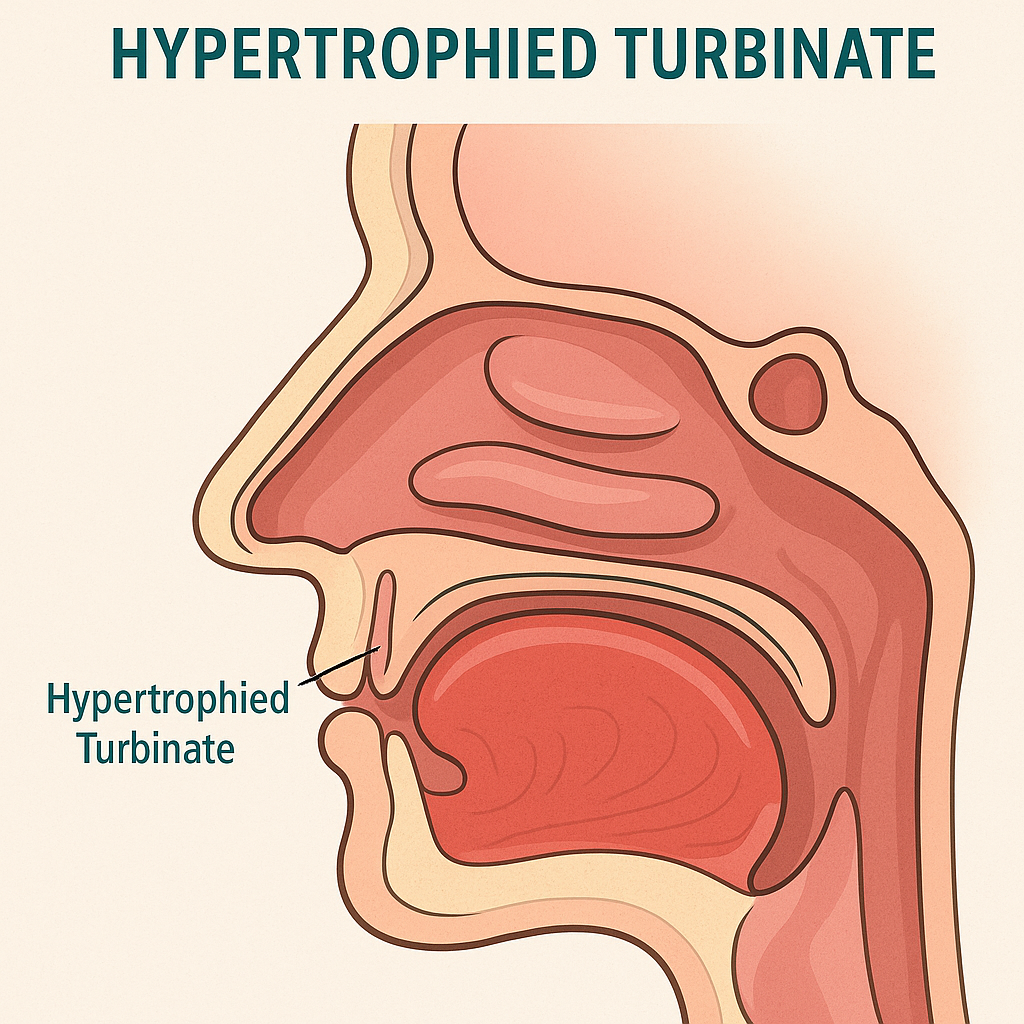
Turbinate hypertrophy refers to enlargement of the nasal turbinates, particularly the inferior turbinates, due to inflammation, allergy, or structural abnormalities. It may be unilateral or bilateral and is a significant cause of nasal obstruction.
Etiological Factors (Causes)
Modern Viewpoint
Chronic Allergic Rhinitis – Prolonged allergic inflammation leads to mucosal thickening.
Vasomotor Rhinitis – Autonomic imbalance causes chronic mucosal congestion.
Compensatory Hypertrophy – Due to deviated nasal septum (DNS) on the opposite side.
Infections – Recurrent upper respiratory tract infections.
Environmental Pollutants – Dust, smoke, chemicals.
Hormonal Changes – Pregnancy-induced rhinitis.
Medicamentosa Rhinitis – Due to overuse of nasal decongestants.
Ayurveda Viewpoint
Kapha-Vata Dushti in Urdhwa Jatrugata Srotas.
Ama formation and Srotorodha (blockage of nasal channels).
Exposure to Sheetala (cold), Rajas (dust), Dhuma (smoke) aggravates Kapha.
Pragvata and Apatya Ahara (wrong diet and habits).
Clinical Features
Nasal congestion (mostly bilateral).
Mouth breathing.
Postnasal drip.
Snoring and disturbed sleep.
Headache or facial pressure.
Reduced sense of smell.
Possible ear blockage or discomfort.
Differential Diagnosis
Disease Differentiating Features
Nasal Polyp Soft, mobile, non-tender mass; insensitive to touch; more common in allergic rhinitis.
Deviated Nasal Septum (DNS) Nasal obstruction is usually unilateral; septal deviation visible on rhinoscopy.
Rhinosinusitis Pain, pressure, nasal discharge; systemic signs like fever in acute cases.
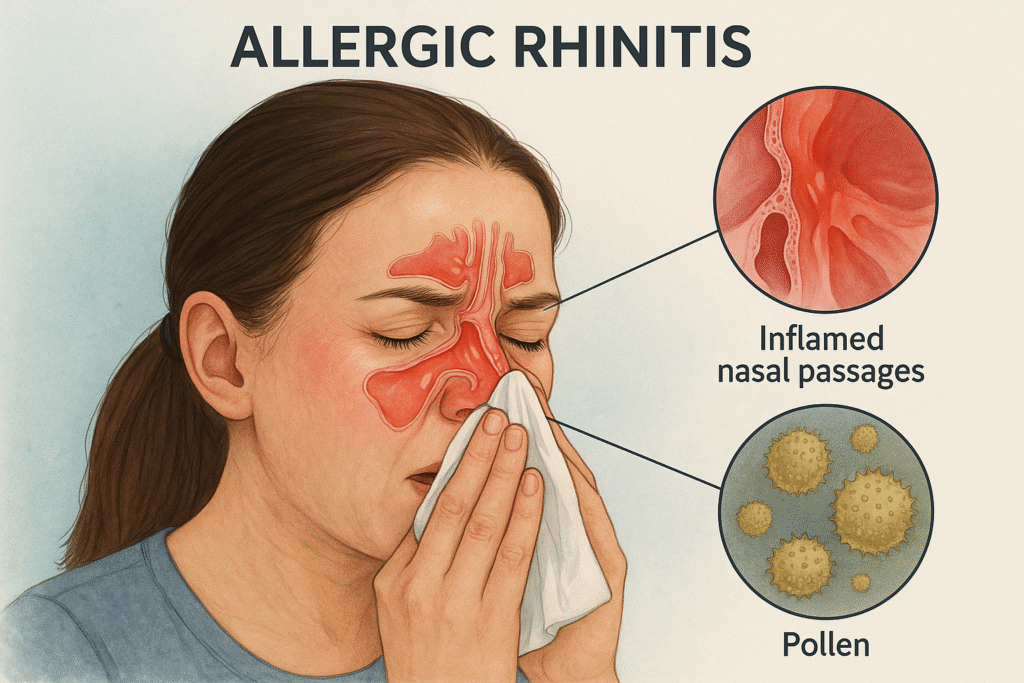
Allergic Rhinitis Sneezing, rhinorrhea, itching; seasonal or perennial pattern.
Rhinitis Medicamentosa History of prolonged use of nasal sprays; rebound congestion.
Nasal Mass/Tumor Progressive obstruction, bleeding, visible mass on endoscopy.
Ayurveda Nidana Panchaka (Diagnostic Framework)
Nidana (Causative Factors)
Rajatpata sevana (dust exposure)
Sheetambu sevana (cold water)
Kapha vardhaka aahara vihara
Divaswapa, Atichintan, Ajirna
Purvarupa (Prodromal Symptoms):
Kandu (itching)
Nasa srava (watery nasal discharge)
Kshavathu (sneezing)
Rupa (Symptoms):
Nasa avarodha (obstruction)
Ghurghurayitvam (snoring)
Gandha hani (loss of smell)
Samprapti
Kapha-Vata vitiation in Urdhwa jatrugata srotas leads to Srotorodha and Shotha (inflammation) of turbinates.
Sadhya-Asadhyata (Prognosis)
Generally Sadhya in early stages with proper Ayurveda intervention.
Chronic or structural causes may require Shastra Karma (surgery).
Ayurveda Management
Nidana Parivarjana (Elimination of Cause)
Avoid dust, cold water, smoking, and allergens.
Regulate diet to avoid Kapha-aggravating foods like curd, banana, fried items.
Shodhana Chikitsa (Detoxification Therapies)
Nasya Karma (Nasal Medicated Therapy):
Anu Taila Nasya – For daily use in chronic hypertrophy.
Shadbindu Taila, Marichyadi Taila – In Kapha-dominant cases.
Vacha taila – In Vata-Kapha vitiation.
Procedure: Pratimarsha (daily), Shodhana (5-7 days).
Vamana Karma (Therapeutic Emesis):
In Kapha-pradhana prakriti with strong digestion and no contraindications.
Preceded by Snehapana and Swedana.
Gandusha/Kavala (Oil Holding/Rinsing)
With Til Taila, Triphala Kashaya, or Yashtimadhu Kashaya.
Shamana Chikitsa (Palliative Measures)
Herbal Medicines
Drug/Formula Action
Sitopaladi Churna Anti-allergic, mucolytic
Talisadi Churna Expectorant, bronchodilator
Vyoshadi Vati Reduces nasal congestion
Haridra Khanda Anti-inflammatory, anti-allergic
Dashamoola Kashaya Anti-inflammatory
Trikatu + Honey Clears Kapha, enhances Agni
Abhayarishta + Dashamoolarishta Useful in chronic cases with constipation
Local Applications
Dhuma Pana (Medicated Smoke): With Haridra, Guggulu, Vacha.
Nasa Dhoomapana: Clears channels, especially beneficial in allergic rhinitis type.
Lepa/Abhyanga on face: With Dashamoola taila or Nirgundi taila.
Diet and Lifestyle Recommendations
Ahara (Diet):
Light, warm, easily digestible food.
Avoid Kapha-aggravating items: curd, cheese, cold drinks, banana, fermented food.
Use spices like ginger, turmeric, black pepper.
Vihara (Lifestyle):
Regular Nasya and steam inhalation.
Pranayama, especially Anulom Vilom, Bhramari.
Avoid exposure to cold winds and allergens.
Early waking (Brahmamuhurta), Dinacharya routine.
Contemporary Supportive Measures (Integrative Approach)
Saline nasal irrigation (Jal neti) – Yoga practice useful in reducing nasal congestion.
Steam inhalation – With tulsi, mint, or ajwain.
ENT Consultation – If symptoms persist, endoscopy to rule out nasal polyps or tumors.
Conclusion
Hypertrophied turbinate is a common clinical entity that hampers quality of life due to chronic nasal obstruction and respiratory discomfort. While modern medicine may rely on antihistamines, corticosteroids, or even surgery, Ayurveda offers a comprehensive, root-cause approach. Through dosha balancing, detoxification (Shodhana), and nasal therapies (Nasya), sustainable management and even reversal of early-stage hypertrophy is achievable.
With appropriate integration of classical Ayurveda principles and modern diagnostic tools, turbinates’ hypertrophy can be effectively addressed, offering long-term relief and improved respiratory health.
Successful Treatment at Aatreya Aarogya Mandir and Research Center, Budhanilkantha-12, Kathmandu, Nepal
Aatreya Aarogya Mandir and Research Center, located in Budhanilkantha Municipality Ward No. 12, Kathmandu, has been successfully treating Hypertrophied Turbinate cases with a holistic Ayurveda protocol.
Highlights of the Treatment Protocol at Aatreya Aarogya Mandir & Research Center
Nasya Therapy (Medicated Nasal Oil):
Customized based on individual dosha and constitution.
Regular application of Anu Taila, Shadbindu Taila, etc.
Clears nasal passages, reduces mucosal swelling, and restores breathing.
Shodhana (Detox Therapy):
Includes Vamana Karma for eligible patients.
Clears accumulated Kapha and toxins from upper respiratory tract.
Internal Herbal Medications:
Sitopaladi Churna, Dashamoola Decoction, and other formulations are prescribed under expert supervision.
Steam and Dhoomapana Therapy:
Clears channels and removes blockages naturally.
Diet and Lifestyle Coaching:
Ayurveda lifestyle education to prevent recurrence.
Focus on dosha-balancing foods, yoga, and daily nasal hygiene.
Unique Strengths of Aatreya Aarogya Mandir & Research Center’s Approach
Non-surgical, side-effect-free management
Personalized and evidence-based Ayurveda care
Supervision by senior Ayurveda physicians with decades of experience
Documented success in reversing nasal obstruction and turbinate hypertrophy
Integration of classical Ayurveda and modern ENT diagnostic tools
Case Outcomes
Chronic allergic rhinitis cases showed 60–80% symptom reversal within weeks.
Compensatory turbinate hypertrophy from DNS managed conservatively without surgery in several patients.
Contact for Consultation and Treatment
Aatreya Aarogya Mandir & Research Center
Budhanilkantha – 12, Nepal Telecom Kapan Road, Kathmandu
Phone: +977-9851093655
Important Note: Treatment Should Be Under Professional Supervision
The Ayurveda therapies, detox procedures, and herbal medicines mentioned above are powerful interventions rooted in classical Ayurveda. Their use must always be based on the clinical evaluation and guidance of a qualified Ayurveda physician.
Self-medication is Hazardous..
The choice of Nasya oil, dosage, duration, and the use of internal medicines such as Sitopaladi Churna, Dashamoola Kwatha, or Vamana therapy depends on:
The patient’s Prakriti (constitution),
Disease stage, and
Associated conditions such as sinusitis, DNS, or allergies.
Even natural remedies like steam inhalation, Dhoomapana, or Pranayama must be adapted carefully in cases of asthma, hypertension, or chronic sinus conditions.
Therefore, all treatments at Aatreya Aarogya Mandir & Research Center are designed, customized, and monitored by senior Ayurveda consultants to ensure:
Safety,
Correct dosha diagnosis,
Sustainable long-term remedy
Long-Term Consequences of Untreated Nasal Allergy & Turbinate Hypertrophy
Individuals suffering from persistent nasal irritation, recurrent sneezing, and chronic nasal blockage due to hypertrophied turbinates or allergic rhinitis are at significant risk of developing more serious respiratory disorders if left unmanaged.
Chronic allergic rhinitis can progress into bronchial asthma.
Prolonged inflammation of the nasal mucosa leads to postnasal drip, airway hypersensitivity, and eventually lower respiratory tract involvement.
Many patients with childhood or adult-onset asthma often report a history of:
Untreated or mismanaged nasal allergies
Chronic turbinate hypertrophy
Frequent cold and sneezing episodes
This condition is referred to as the “Allergic March” – a progression from upper airway allergy to lower airway asthma.
Ayurveda’s Preventive Strength
Early intervention with Ayurveda therapies like Nasya, Shodhana, and immune-modulating herbs (like Haridra, Guduchi, Pippali) can:
Prevent the spread of Kapha-Vata imbalance into deeper systems,
Restore immune balance, and
Therefore:
Never ignore chronic nasal symptoms.
Avoid chronic conditions such as asthma or sinusitis.
Seek Ayurveda consultation early at Aatreya Aarogya Mandir, where root-cause-based and holistic care is provided.
Avoid long-term use of over-the-counter decongestants, which may worsen rebound congestion and dependence.

