Ayurveda for Mental Health: A Complete Guide to Healthy Mind, Healthy Life


Table of Contents
Mental health is now one of the most critical public health concerns worldwide. Stress, anxiety, depression, emotional fatigue, sleep disorders and digital burnout have become common across all age groups. The global message “Healthy Mind, Healthy Life”, various Mental Health Awareness Campaigns, and the slogan “Let’s Talk about Mental Health” highlight the urgency of addressing psychological well-being.
Ayurveda—the ancient science of life—offers a holistic, root-cause–based approach to mental health. It integrates mind (Manas), intellect (Buddhi) and consciousness (Aatma), providing natural tools to cultivate emotional stability, peace and resilience.
Understanding Mental Health through Ayurveda

Ayurveda explains mental health based on the balance of the three mental qualities (Triguna):
Sattva – Purity, clarity, positivity
Rajas – Activity, restlessness, ambition
Tamas – Darkness, lethargy, confusion
When Sattva is dominant, the mind remains calm, wise and joyful.
When Rajas or Tamas dominate, mental disturbances arise.
Ayurveda Causes of Mental Health Imbalance
According to Ayurveda, mental disorders arise due to:
Chronic stress and anxiety
Irregular lifestyle
Vata imbalance (nervous system instability)
Poor sleep patterns
Emotional shock or trauma
Digital overload
Unhealthy food habits (Rajas/Tamas-increasing foods)
Social isolation and lack of communication
Suppressed emotions
Common Mental Health Issues Ayurveda Can Manage

Ayurveda is effective for conditions such as:
Stress and anxiety disorders
Depression and low mood
Insomnia and sleep disorders
Panic attacks
Irritability and anger
Cognitive decline
Psychosomatic disorders
Chronic fatigue and emotional burnout
Ayurveda Approaches to Mental Wellness
Satvavajaya Chikitsa (Ayurveda Psychotherapy)
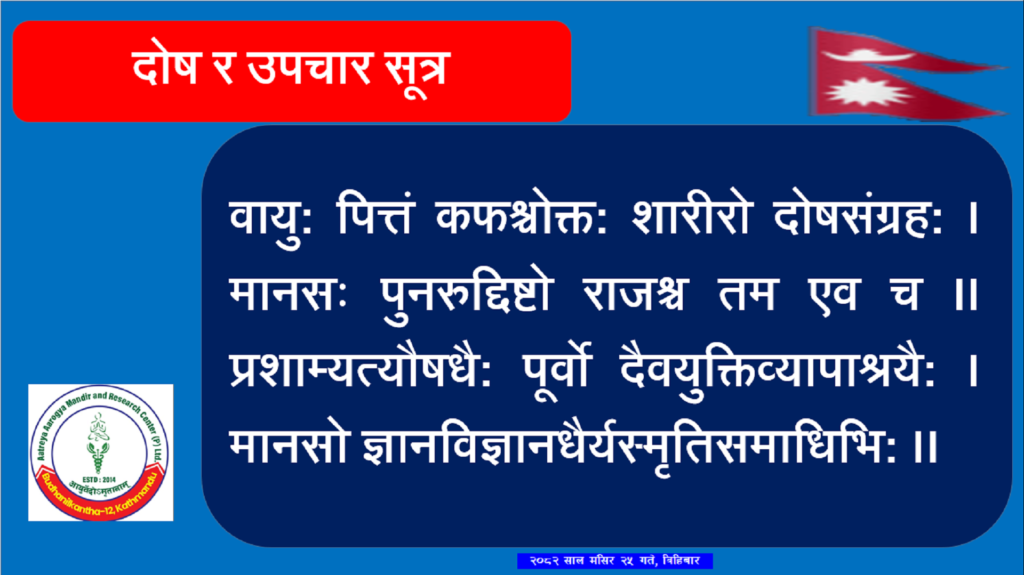
This ancient form of counselling parallels modern cognitive and behavioral therapies.
Its principles include:
Strengthening self-control
Replacing negative thoughts
Cultivating healthy habits
Enhancing knowledge and emotional stability
Restoring confidence and mental clarity
This directly supports the slogan “Let’s Talk about Mental Health” by encouraging open sharing and emotional expression.
Dinacharya & Lifestyle Regulation

Ayurveda emphasizes that a regulated lifestyle is the foundation of mental health.
Key practices include:
Waking up in Brahmamuhurta
Drinking warm water
Light exercise and stretching
Meditation and breathing
Balanced meals at proper times
Adequate sleep
Digital discipline
Regularity decreases stress hormones and improves emotional balance.
Medhya Rasayana (Brain-Nourishing Herbs)
Ayurveda recommends powerful herbs that improve memory, calm the mind and support long-term mental health:
Brahmi (Bacopa monnieri) – Enhances memory, reduces anxiety
Shankhpushpi (Convolvulus pluricaulis) – Improves concentration
Ashwagandha – Reduces stress; stabilizes mood
Jatamansi – Promotes deep calm
Yashtimadhu (Licorice) – Supports emotional stability
Guduchi (Tinospora cordifolia) – Adaptogenic & immunity-enhancing
These herbs act as natural brain tonics without harmful side effects.
Yoga & Pranayama for Mind Control
Yoga is both mental and physical therapy.
Important practices:
Aatreya Ayurveda Var-Pipal-Shami Yoga Chautari Package
Shithilikarana and Sukshma Vyayama
Four categories of carefully selected postures, each containing six asanas: Sitting Asanas, Standing Asanas, Prone Asanas, and Supine Asanas.
Yogic Dance 6 minute per day
Bhramari: reduces stress
Nadi Shodhana: balances brain hemispheres
Sheetali / Sheetkari: cools anger and irritability
Surya & Chandra Namaskar: balances hormones
Shavasana: resets the nervous system
These techniques embody the essence of “Healthy Mind, Healthy Life.”
Meditation & Mindfulness
Meditation is considered the “medicine of the mind” in Ayurveda.
Benefits:
Reduces anxiety
Enhances sleep quality
Improves focus and memory
Regulates emotional responses
Decreases cortisol (stress hormone)
A daily 10–20-minute meditation practice transforms mental well-being.
Sattvik Diet (Food for Mental Peace)
Ayurveda considers food as the first medicine.
Foods that promote mental clarity (Sattva):
Fruits and vegetables
Ghee and cow’s milk
Almonds and nuts
Mung dal, whole grains
Light, warm, freshly prepared meals
Foods that disturb mental balance (Rajas/Tamas):
Alcohol
Excessively spicy or oily foods
Packaged/junk foods
Fermented and stale foods
Heavy meals at night
Choosing Sattvik food stabilizes mood and improves brain function.
Panchakarma for Detoxification
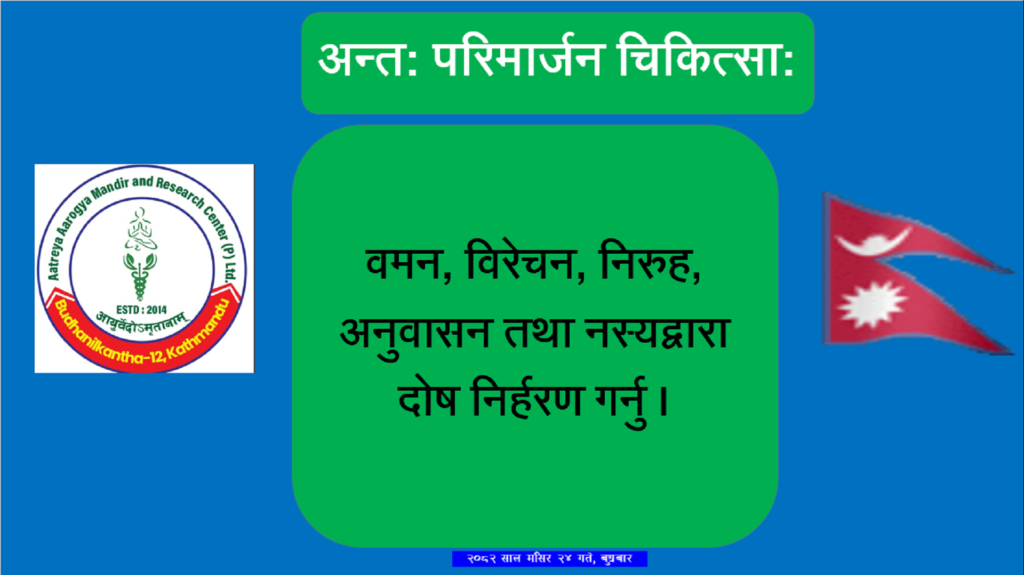
Specific therapies such as:
Aatreya Ayurveda Clinical Panchakarma Package
Aatreya Ayurveda Deep Clinical Abhyanga with Marma Therapy
Aatreya Ayurveda Sarvanga Swedana
Shirodhara
Abhyanga
Nasya
Takra Dhara
Basti
All help calm the nervous system, reduce Vata imbalance and cleanse toxins affecting mental clarity.
Ayurveda in Community Mental Health Awareness

Ayurveda strongly aligns with global mental health campaigns:
Aatreya Ayurveda Spiritual Psychosocial Counselling
“Healthy Mind, Healthy Life”
Ayurveda establishes that wellness begins with mental clarity, balanced emotions and healthy lifestyle.
“Mental Health Awareness Campaign”
Ayurveda promotes preventive mental healthcare through education, lifestyle, diet and emotional support.
“Let’s Talk About Mental Health”
Ayurveda psychology encourages open communication (Manovyapara) to release suppressed emotions and heal social isolation.
Conclusion: Towards a Mentally Healthy Society
Ayurveda views mental health not merely as the absence of disease but as a state of peace, clarity, purpose and emotional resilience.
Through herbs, diet, yoga, meditation, lifestyle and counselling, Ayurveda offers a holistic, natural and sustainable model for mental well-being.
Ayurveda for Mental Health is a scientific and time-tested approach that empowers every individual to achieve:
Emotional balance, Inner peace, Strong resilience & Meaningful life
Creating a society where people genuinely live the spirit of:
“Healthy Mind, Healthy Life” – and openly talk about their mental well-being.
Ayurveda for Mental Health Ayurveda for Mental Health Ayurveda for Mental Health Ayurveda for Mental Health Ayurveda for Mental Health Ayurveda for Mental Health Ayurveda for Mental Health Ayurveda for Mental Health