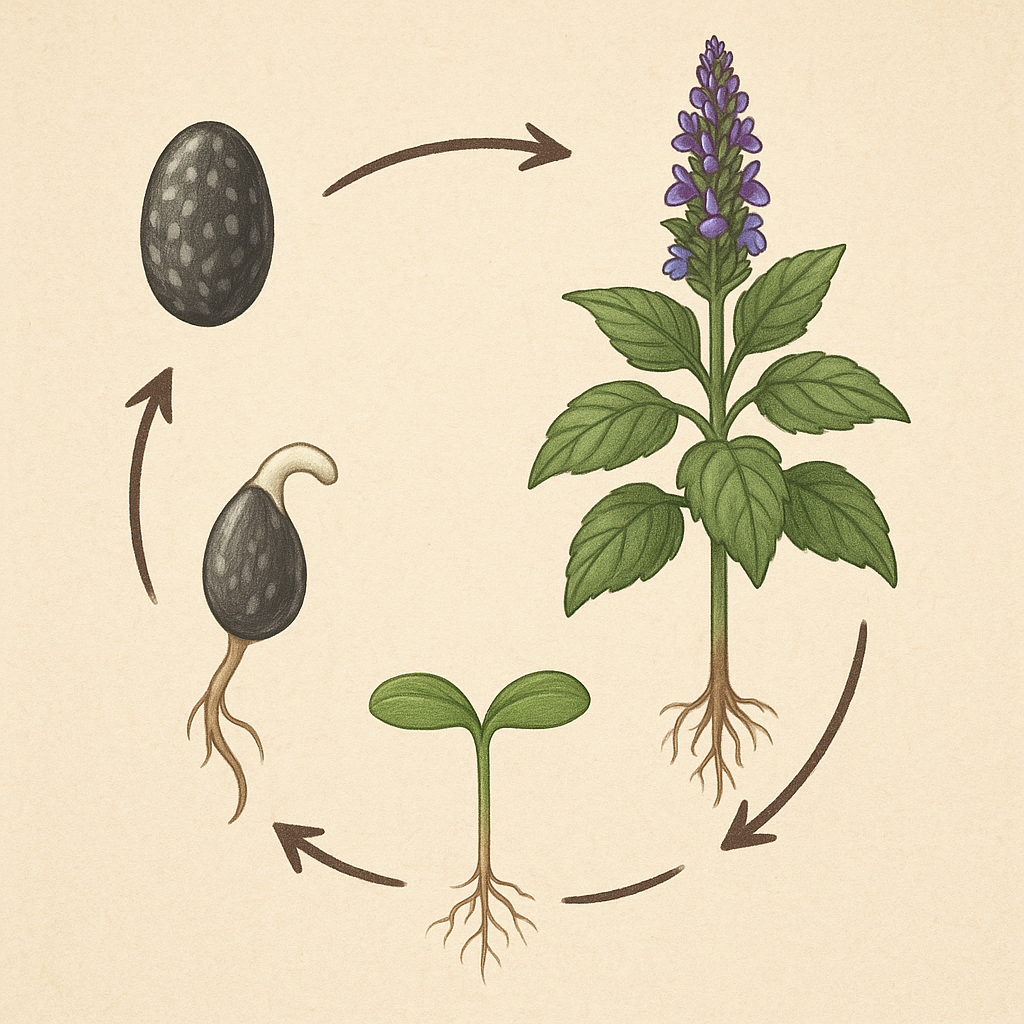



Chia Seeds: An Introduction
Chia seeds are the edible seeds of Salvia hispanica, a flowering plant in the mint family (Lamiaceae), native to Central America. Despite their tiny size (about 1–2 mm), chia seeds are considered a modern “superfood” due to their dense nutritional profile and wide range of health benefits, appreciated both in modern nutrition and through an Ayurvedic lens.
Historical Background
Chia seeds were a staple in the ancient Aztec and Mayan diets. In fact, the word “chia” means “strength” in the Mayan language. These seeds were believed to enhance endurance, provide sustained energy, and preserve vitality. Chia seeds were even used as offerings in religious ceremonies.
Nutritional Composition
Chia seeds are a powerhouse of nutrition. They contain:
Fiber – About 5 grams per tablespoon (10g)
Complete protein – Including all 9 essential amino acids
Omega-3 fatty acids (ALA) – Beneficial for brain and heart health
Minerals – Calcium, magnesium, phosphorus, potassium, zinc
Antioxidants – Protects cells from oxidative damage
Vitamins – Including B1 (thiamine), B2 (riboflavin), B3 (niacin)
Health Benefits
Heart Health
Rich in ALA omega-3 fatty acids, chia seeds help reduce LDL cholesterol and blood pressure, and improve overall cardiovascular function.
Blood Sugar Regulation
Soluble fiber slows digestion and glucose absorption, aiding in blood sugar control—beneficial for people with diabetes.
Digestive Support
High fiber content supports bowel regularity and gut health, preventing constipation.
Weight Management
When soaked in water, chia seeds form a gel that expands in the stomach, promoting satiety and reducing overeating.
Bone Strength
With high calcium, magnesium, and phosphorus content, chia seeds support bone density and strength.
Skin, Hair, and Eyes
Omega-3s and antioxidants help maintain glowing skin, reduce hair fall, and protect eye health.
Ayurveda Perspective
Although not directly mentioned in classical Ayurvedic texts (as the plant is not native to India), based on Ayurvedic principles, chia seeds can be interpreted as follows:
Rasa (Taste): Sweet (madhura), Slightly bitter (tikta)
Guna (Qualities): Heavy (guru), Unctuous (snigdha)
Virya (Potency): Cooling (shita)
Vipaka (Post-digestive effect): Sweet (madhura)
Dosha Effect: Pacifies Pitta and Vata; may increase Kapha in excess.
Ayurveda Applications
Useful for those with excess heat in the body (pitta disorders).
Helpful in conditions like burning sensation, digestive disturbances, and dehydration.
Should be taken cautiously in those with weak digestion or excess kapha.
Methods of Consumption
Soaked Form (Best Recommended)
Soak 1–2 tablespoons in a glass of water for 30 minutes to 2 hours and drink.
In Smoothies or Yogurt
Add to fruit smoothies, oats, or curd for enhanced nutrition.
In Dishes
Use in puddings, soups, energy balls, or desserts.
Precautions
Never consume dry chia seeds in large quantity—they can swell and choke if not hydrated.
People with sensitive digestion or IBS should start with small amounts.
Excess consumption may lead to bloating or gas.
Chia Seeds as a Functional Food
Chia seeds can be a good alternative or supplement to high-carb grains. They provide sustained energy without spiking blood sugar and help manage metabolic disorders. For those aiming to lose weight or maintain a balanced diet, chia seeds support satiety and provide essential nutrients.
Conclusion
Chia seeds are a remarkable example of how a simple natural food can offer immense health benefits. From balancing blood sugar and improving digestion to supporting heart and bone health, they deserve a place in every kitchen. As Ayurveda says, “Annam hi aushadham shreshtham” — “Food is the best medicine.” Chia seeds truly embody this principle as a healing food.
Aatreya Ayurveda Lifestyle Recommendations
Drink soaked chia seeds in warm water early in the morning (especially during warm seasons).
Include them in light evening meals or soups.
Use seasonally and moderately, in alignment with one’s prakriti (body constitution).


o92waw