


Table of Contents
Chintan: The Backbone of Conscious Living
Introduction
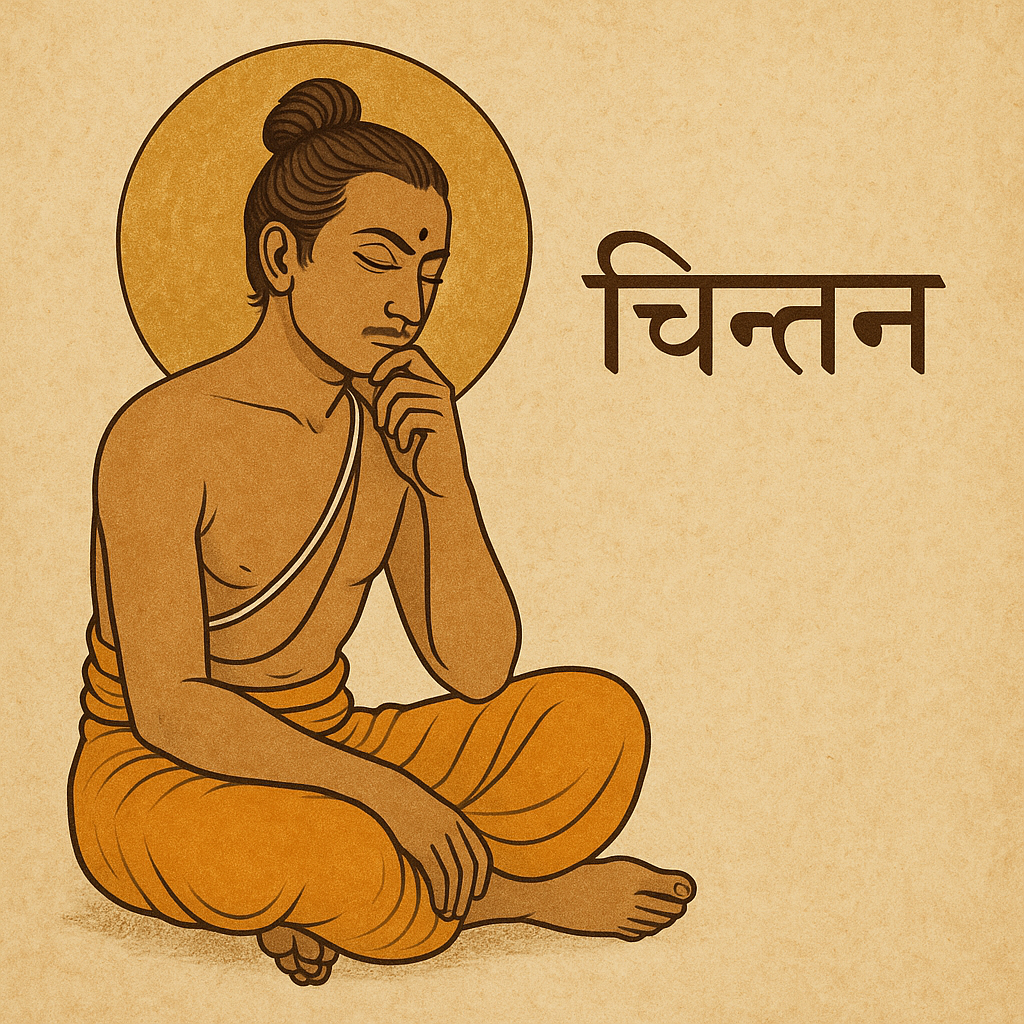
“Chintan,” a Sanskrit-derived word, refers to deep contemplation, reflection, and thoughtful consideration. It is more than just a mental process — it is the very foundation of human consciousness and purposeful living. Through chintan, individuals analyze, evaluate, and discover meanings that shape their decisions, behavior, and worldview. It is the path toward clarity, self-awareness, and wisdom.
Types of Chintan
Positive Thinking (Sakaratmak Chintan):
This type of contemplation nurtures hope, resilience, and a solution-oriented mindset. It enhances mental well-being and improves the overall quality of life.
Negative Thinking (Nakaratmak Chintan):
Dwelling on fear, self-doubt, and pessimism leads to emotional stress, indecisiveness, and even destructive tendencies. It is an obstacle to growth and peace.
Critical Thinking:
Based on logic, reasoning, and evidence, critical thinking empowers individuals to question assumptions, avoid biases, and make informed decisions. It is the backbone of rational education.
Spiritual Contemplation:
Reflecting on the nature of the soul, existence, divinity, and ultimate truth is known as spiritual chintan. Practices like meditation, self-inquiry, and scriptural study facilitate this path.
Philosophical Thinking:
This involves deep intellectual reflection on ethics, truth, consciousness, and the nature of reality. It forms the basis of value systems, civilizations, and progressive thought.
Importance of Chintan
Enhances Decision-Making: Deep thinking leads to wise and timely choices.
Solves Problems: Reflective thought opens paths to effective solutions.
Fosters Self-Knowledge: Contemplation helps individuals understand themselves.
Encourages Creativity: Original ideas and innovations arise from thoughtful insights.
Promotes Mental Health: Balanced thinking supports emotional stability and peace.
Chintan in Cultural and Spiritual Context
In the Vedic and Yogic traditions, chintan is not just encouraged — it is considered essential. Texts like the Upanishads, Bhagavad Gita, and Yoga Sutras highlight contemplative practices such as:
Shravana (Listening)
Manana (Reflection)
Nididhyasana (Meditative Absorption)
Chintan is also integral to the process of Atma Vichara — self-inquiry — in Advaita Vedanta and other Indian philosophical schools.
Obstacles to Healthy Chintan
Overthinking and mental clutter
Lack of accurate information or exposure
Prejudices, dogmas, and superstitions
Laziness or mental lethargy
Attachment to materialism and instant gratification
Cultivating Balanced Chintan
Practice daily meditation and mindfulness
Surround yourself with uplifting thoughts and company
Follow a holistic lifestyle (such as the Ayurveda lifestyle)
Read, reflect, and engage in self-study
Spend time in nature and solitude regularly
Conclusion
Chintan is the key to unlocking inner clarity, truth, and transformation. In today’s fast-paced, distracted world, it is more urgent than ever to return to deep thinking and meaningful reflection. Contemplation not only uplifts the individual but also guides society toward ethical and sustainable progress. In short, “Think deeply, live wisely” should be the mantra of our time.


