

Table of Contents
Panchamahabhuta: The Five Great Elements of Creation
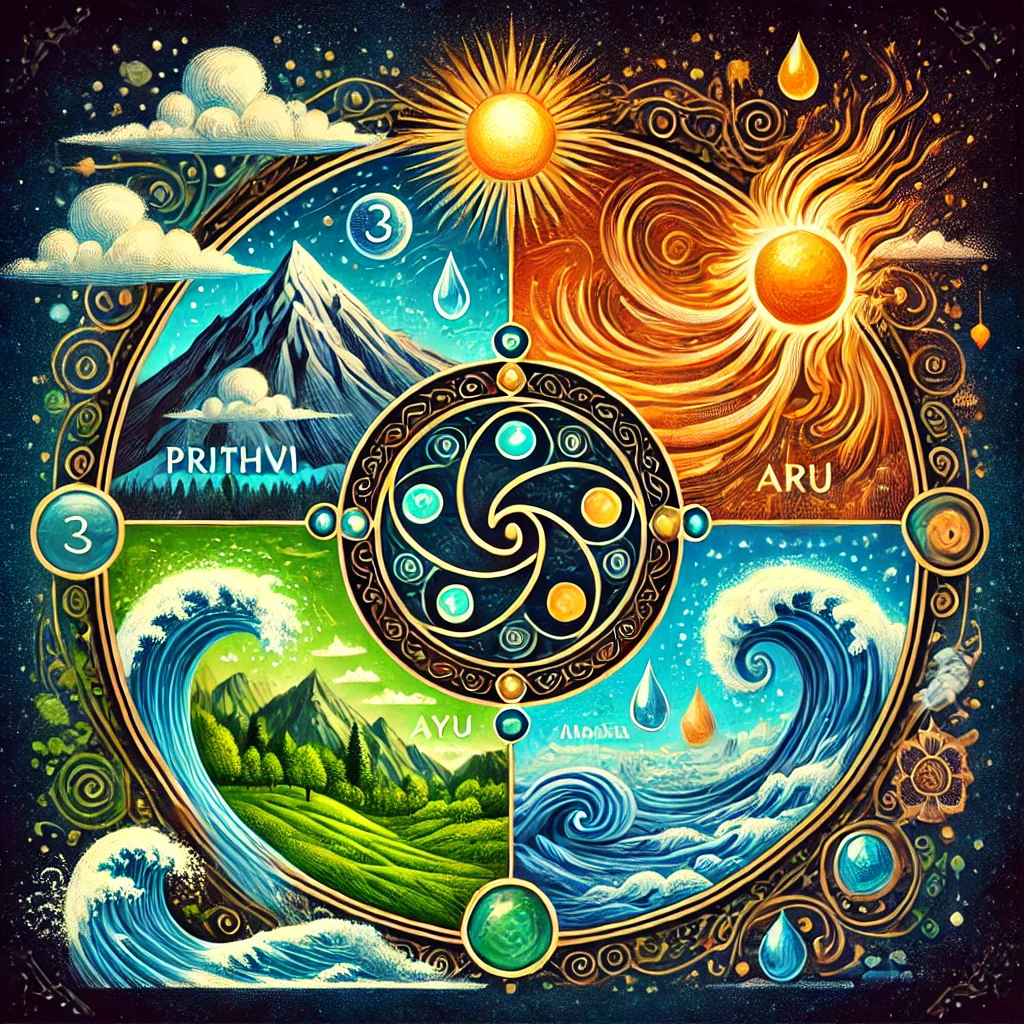
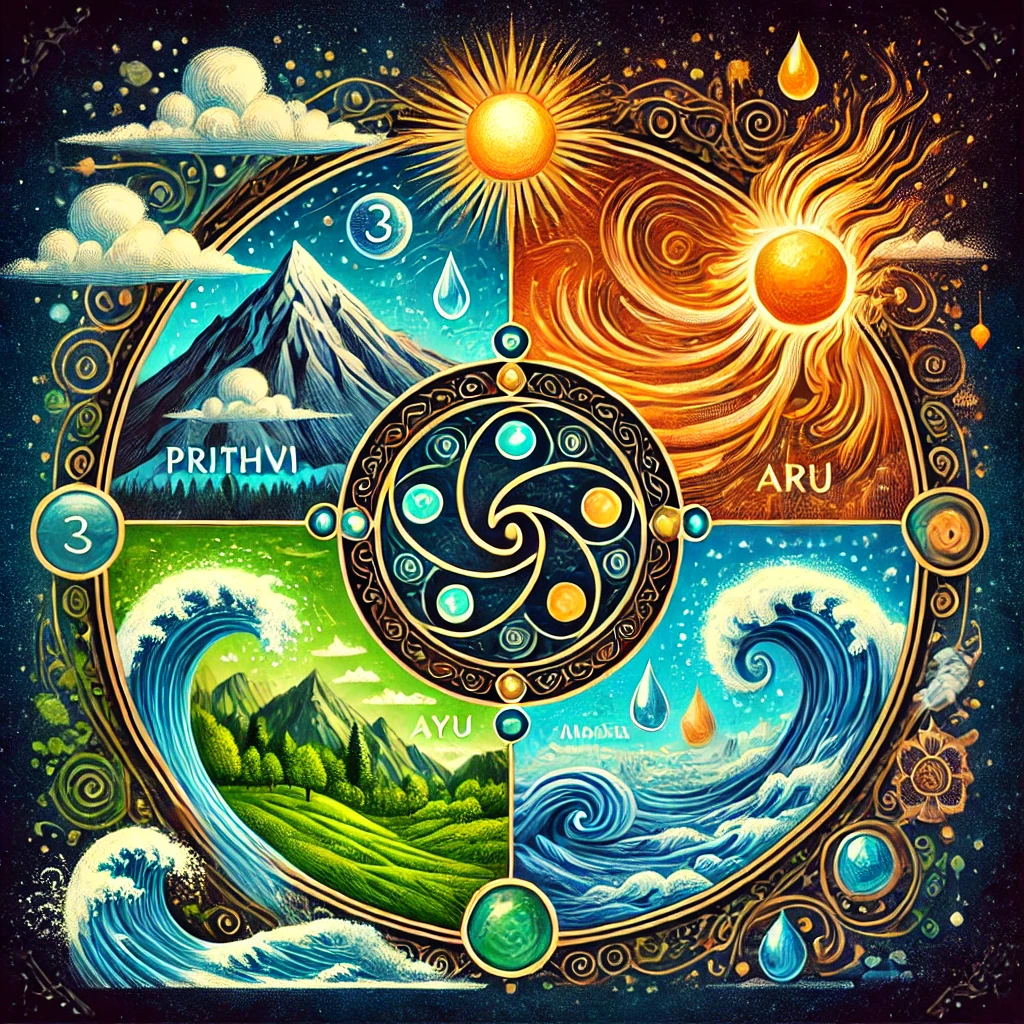
In Vedic philosophy and Ayurveda, the entire universe is believed to be composed of five fundamental elements, collectively known as Panchamahabhuta. These elements are Prithvi (Earth), Ap (Water), Tejas (Fire), Vayu (Air), and Akasha (Ether/Space). Every physical and biological existence is a combination of these five elements in different proportions.
Introduction
- Earth (Prithvi) – Provides stability, density, and structure.
- Water (Ap) – Represents fluidity, nourishment, and life force.
- Fire (Tejas) – Governs heat, transformation, and metabolism.
- Air (Vayu) – Controls movement, communication, and consciousness.
- Ether (Akasha) – Represents space, expansion, and the medium for sound.
All living and non-living beings are formed by the unique combination of these five elements.
Ayurveda Perspective
Ayurveda states that the human body is made up of Panchamahabhuta. Each organ, tissue (Dhatu), bodily function, and waste (Mala) is governed by these elements.
| Element | Presence in the Human Body |
|---|---|
| Earth | Bones, muscles, skin, hair |
| Water | Blood, plasma, mucus, sweat |
| Fire | Digestion, metabolism, body temperature |
| Air | Respiration, nervous system, circulation |
| Ether | Cellular spaces, hollow organs |
Relationship with Dosha
According to Ayurveda, the three Doshas (Vata, Pitta, and Kapha) arise from these elements:
Vata Dosha = Air + Ether (controls movement and communication)
Pitta Dosha = Fire + Water (governs digestion and metabolism)
Kapha Dosha = Earth + Water (provides structure and lubrication)
Imbalances in these elements can lead to various diseases and health issues.
Correlation with the Five Senses
Each of the five elements corresponds to one of the five sense organs (Panchendriya), influencing our perception of the world.
| Element | Sense Organ | Associated Sensation |
|---|---|---|
| Earth | Nose (Smell) | Odor |
| Water | Tongue (Taste) | Flavor |
| Fire | Eyes (Sight) | Vision |
| Air | Skin (Touch) | Sensation |
| Ether | Ears (Hearing) | Sound |
This shows that our sensory perception is directly influenced by Panchamahabhuta.
In Yoga and Spirituality
In Yoga and Tantra, the five elements play a crucial role in balancing physical and spiritual energy. The Chakras (energy centers) in the human body are associated with different elements:
| Element | Associated Chakra |
|---|---|
| Earth | Muladhara Chakra (Root Energy) |
| Water | Swadhisthana Chakra (Creativity & Emotions) |
| Fire | Manipura Chakra (Power & Digestion) |
| Air | Anahata Chakra (Heart & Love) |
| Ether | Vishuddha Chakra (Communication & Awareness) |
Balancing these elements through yoga and meditation leads to spiritual awakening and overall well-being.
In Vastu Shastra (Architectural Science)
In Vastu Shastra, the balance of Panchamahabhuta is essential for a harmonious living space.
| Element | Role in Vastu Shastra |
|---|---|
| Earth | Stability (South-West direction) |
| Water | Purity & Flow (North-East) |
| Fire | Energy & Transformation (South-East) |
| Air | Movement & Balance (North-West) |
| Ether | Open Space (Center of the house) |
Maintaining this elemental balance ensures health, prosperity, and peace.
In Modern Science
Modern science also categorizes matter into five fundamental states, which correspond closely to the Panchamahabhuta:
| Element | Scientific Equivalent |
|---|---|
| Earth | Solid |
| Water | Liquid |
| Fire | Plasma |
| Air | Gas |
| Ether | Quantum Space (Ether) |
This correlation highlights the deep connection between ancient wisdom and modern physics.
How to Balance in Daily Life
Practice Yoga & Pranayama – Balances Air and Ether elements.
Follow Ayurvedic Lifestyle – Harmonizes Earth, Water, and Fire.
Eat a Sattvic Diet – Maintains elemental equilibrium.
Regular Meditation – Enhances mental and spiritual stability.
Live Naturally – Aligns the body with nature’s elements.
The Three body humors are made up of Panchamahabhuta. Aakash & Prithivi are not included in body humors, only Vayu, Agni & Jala are in body humors but all Panchamahabhuta are in composition of the same.
Conclusion
Panchamahabhuta is not just a philosophical or religious concept but a fundamental truth of existence. Whether it is our body, mind, or environment, maintaining balance among these five elements is essential for a healthy and prosperous life.
Ayurveda, Yoga, Vastu Shastra, Tantra, and even modern science acknowledge the significance of these elements. By understanding and harmonizing Panchamahabhuta, we can achieve physical well-being, mental peace, and spiritual enlightenment.