

Table of Contents

Pragyaparadha: The Fundamental Cause of All Diseases in Ayurveda
Sanskrit Verse
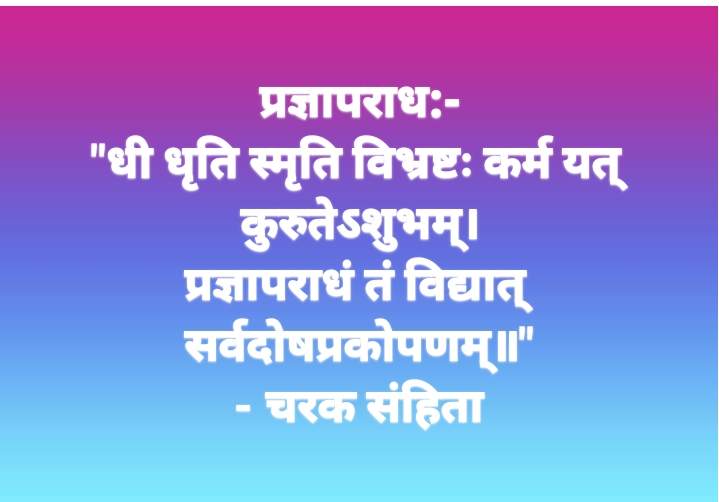
धी धृति स्मृति विभ्रष्टः कर्म यत् कुरुतेऽशुभम्।
प्रज्ञापराधं तं विद्यात् सर्वदोषप्रकोपणम्॥
– चरक संहिता
“Dhī dhṛti smṛti vibhrashtaḥ karma yat kurute ‘śubham |
Prajñāparādhaṁ taṁ vidyāt sarva-doṣa-prakopaṇam ||”
— Charaka Saṁhitā
Literal Translation
“When one loses the faculties of intellect (Dhee), fortitude (dhriti), and memory (smriti), and thereby performs inauspicious or harmful actions, it is known as Pragyparadha—the error of intellect. It is the root cause for the aggravation of all the Dosha (bodily humors).”
Definition
Pragyaparadha means “offense or transgression of wisdom/intellect.” It is a conscious or unconscious misuse of one’s inner faculties—knowing something to be harmful and still choosing to engage in it. It is considered the root cause of all diseases in Ayurveda.
It refers to the corruption or failure of three important mental faculties:
Dhee (Intellect)
The power to discern right from wrong
Dhṛti (Willpower/Restraint)
The ability to resist temptations or wrong actions despite knowing their effects
Smriti (Memory)
The ability to remember past experiences and learn from them
When these three are impaired, a person performs Ashubha karma (unwholesome actions), knowingly or unknowingly, leading to disease and imbalance.
Causes
Excessive attachment (Raga), aversion (Dvesha), or delusion (Moha)
Lack of self-control or weak willpower
Neglecting learned knowledge and experience
Following harmful modern or cultural trends blindly
Overuse or misuse of the senses
(Asatmyendriyartha Samyoga)
Environmental, societal, or peer pressure
Examples
Types & Example
Dietary
Eating heavy or spicy food during indigestion or fever
Lifestyle
Staying awake late at night despite knowing its harmful effects
Mental
Persistently holding on to anger, jealousy, or fear
Ethical/Moral
Engaging in violence, deceit, or immoral behavior consciously
Environmental
Polluting nature despite knowing its consequences
Effects
The Shloka states that Pragyaparadha provokes all Dosha
Vāta, Pitta, and Kapha become imbalanced
Leads to Ama (toxins) formation
Disturbs agni (digestive/metabolic fire)
Causes psychosomatic disorders
Leads to spiritual and moral downfall
It also gives rise to both communicable and non-communicable diseases.
Modern Context
In contemporary life, Pragyaparadha manifests as:
Addictions: smoking, alcohol, excessive screen use, junk food
Lifestyle disorders: obesity, diabetes, hypertension, insomnia
Mental health issues: anxiety, depression, chronic stress
Environmental damage: climate change, air/water pollution
Moral decline: loss of ethical values, dishonesty, violence
Even when we know what is harmful, we often continue to indulge. This is Pragyaparadha.
Management of Pragyaparadha
Ayurveda prescribes multiple approaches to overcome this intellectual error:
Sattvavajaya Chikitsa (Psychotherapy)
Enhancing the strength of the mind
Cultivating clarity, balance, and control
Practices like meditation, mantra chanting, satsanga
Daivavyapasraya Chikitsa (Spiritual therapy)
Prayers, rituals, and offerings
Faith-based healing practices
Knowledge & Awareness:
Regular study of Dharma, Aachara, Vedanta, Ayurveda
Guidance from teachers, gurus, elders
Lifestyle Alignment (Aatreya Ayurveda lifestyle Perspective)
Following Dincharya (daily routine), Ritucharya (seasonal regimen)
Sadvṛtta – ethical and moral conduct
Aachara Rasayana – rejuvenation through conduct
Balanced Vedic diet and spiritual living
Role in Prevention of Disease (Especially NCDs)
According to Aatreya Ayurveda Lifestyle, preventing Pragyaparadha is the most important preventive strategy for Non-Communicable Diseases (NCDs) like:
Diabetes
Hypertension
Obesity
Mental Health Disorders
Cancer
Autoimmune conditions
These are all rooted in wrong choices and habits, i.e., in Pragyaparadha.
Conclusion
Pragyaparadha is the subtlest and most powerful cause of all human suffering and disease. Ayurveda does not just see disease as a biological event, but a moral and intellectual deviation. Healing must therefore begin with self-awareness, moral discipline, and lifestyle correction.
Avoiding Pragyaparadha is the first step toward true health and harmony with nature.
Pragyaparadha: The Fundamental Cause of All Diseases in Ayurveda
Sanskrit Verse
“Dhī dhṛti smṛti vibhrashtaḥ karma yat kurute ‘śubham |
Prajñāparādhaṁ taṁ vidyāt sarva-doṣa-prakopaṇam ||”
— Charaka Saṁhitā, Sūtrasthāna 1.102
Literal Translation
“When one loses the faculties of intellect (Dhee), fortitude (dhriti), and memory (smriti), and thereby performs inauspicious or harmful actions, it is known as Pragyparadha—the error of intellect. It is the root cause for the aggravation of all the Dosha (bodily humors).”
Definition
“धी धृति स्मृति विभ्रष्टः कर्म यत् कुरुतेऽशुभम्।
प्रज्ञापराधं तं विद्यात् सर्वदोषप्रकोपणम्॥”
— चरक संहिता
Pragyaparadha means “offense or transgression of wisdom/intellect.” It is a conscious or unconscious misuse of one’s inner faculties—knowing something to be harmful and still choosing to engage in it. It is considered the root cause of all diseases in Ayurveda.
It refers to the corruption or failure of three important mental faculties:
- Dhee (Intellect)
The power to discern right from wrong
Dhṛti (Willpower/Restraint)
The ability to resist temptations or wrong actions despite knowing their effects
Smriti (Memory)
The ability to remember past experiences and learn from them
When these three are impaired, a person performs Ashubha karma (unwholesome actions), knowingly or unknowingly, leading to disease and imbalance.
Causes of Pragyaparadha
Excessive attachment (Raga), aversion (Dvesha), or delusion (Moha)
Lack of self-control or weak willpower
Neglecting learned knowledge and experience
Following harmful modern or cultural trends blindly
Overuse or misuse of the senses
(Asatmyendriyartha samyoga)
Environmental, societal, or peer pressure
Examples of Pragyaparadha
Types & Example
Dietary
Eating heavy or spicy food during indigestion or fever
Lifestyle
Staying awake late at night despite knowing its harmful effects
Mental
Persistently holding on to anger, jealousy, or fear
Ethical/Moral
Engaging in violence, deceit, or immoral behavior consciously
Environmental
Polluting nature despite knowing its consequences
Effects of Pragyaparadha
The Shloka states that Pragyaparadha provokes all Dosha
Vāta, Pitta, and Kapha become imbalanced
Leads to Ama (toxins) formation
Disturbs agni (digestive/metabolic fire)
Causes psychosomatic disorders
Leads to spiritual and moral downfall
It also gives rise to both communicable and non-communicable diseases.
Pragyaparadha in Modern Context
In contemporary life, Pragyaparadha manifests as:
Addictions: smoking, alcohol, excessive screen use, junk food
Lifestyle disorders: obesity, diabetes, hypertension, insomnia
Mental health issues: anxiety, depression, chronic stress
Environmental damage: climate change, air/water pollution
Moral decline: loss of ethical values, dishonesty, violence
Even when we know what is harmful, we often continue to indulge. This is Pragyaparadha.
Management
Ayurveda prescribes multiple approaches to overcome this intellectual error:
Sattvavajaya Chikitsa (Psychotherapy)
Enhancing the strength of the mind
Cultivating clarity, balance, and control
Practices like meditation, mantra chanting, satsanga
Daivavyapasraya Chikitsa (Spiritual therapy)
Prayers, rituals, and offerings
Faith-based healing practices
Knowledge & Awareness:
Regular study of Dharma, Aachara, Vedanta, Ayurveda
Guidance from teachers, gurus, elders
Lifestyle Alignment (Aatreya Ayurveda lifestyle Perspective)
Following Dincharya (daily routine), Ritucharya (seasonal regimen)
Sadvṛtta – ethical and moral conduct
Aachara Rasayana – rejuvenation through conduct
Balanced Vedic diet and spiritual living
Role in Prevention of Disease (Especially NCDs)
According to Aatreya Ayurveda Lifestyle, preventing Pragyaparadha is the most important preventive strategy for Non-Communicable Diseases (NCDs) like:
Diabetes
Hypertension
Obesity
Mental Health Disorders
Cancer
Autoimmune conditions
These are all rooted in wrong choices and habits, i.e., in Pragyaparadha.
Conclusion
Pragyaparadha is the subtlest and most powerful cause of all human suffering and disease. Ayurveda does not just see disease as a biological event, but a moral and intellectual deviation. Healing must therefore begin with self-awareness, moral discipline, and lifestyle correction.
Avoiding Pragyaparadha is the first step toward true health and harmony with nature.
Pragyaparadha: The Fundamental Cause of All Diseases in Ayurveda
Sanskrit Verse
“Dhī dhṛti smṛti vibhrashtaḥ karma yat kurute ‘śubham |
Prajñāparādhaṁ taṁ vidyāt sarva-doṣa-prakopaṇam ||”
— Charaka Saṁhitā, Sūtrasthāna 1.102
Literal Translation
“When one loses the faculties of intellect (Dhee), fortitude (dhriti), and memory (smriti), and thereby performs inauspicious or harmful actions, it is known as Pragyparadha—the error of intellect. It is the root cause for the aggravation of all the Dosha (bodily humors).”
Pragyaparadha means “offense or transgression of wisdom/intellect.” It is a conscious or unconscious misuse of one’s inner faculties—knowing something to be harmful and still choosing to engage in it. It is considered the root cause of all diseases in Ayurveda.
It refers to the corruption or failure of three important mental faculties:
Dhee (Intellect)
The power to discern right from wrong
Dhṛti (Willpower/Restraint)
The ability to resist temptations or wrong actions despite knowing their effects
Smriti (Memory)
The ability to remember past experiences and learn from them
When these three are impaired, a person performs Ashubha karma (unwholesome actions), knowingly or unknowingly, leading to disease and imbalance.
Causes of Pragyaparadha
Excessive attachment (Raga), aversion (Dvesha), or delusion (Moha)
Lack of self-control or weak willpower
Neglecting learned knowledge and experience
Following harmful modern or cultural trends blindly
Overuse or misuse of the senses
(Asatmyendriyartha samyoga)
Environmental, societal, or peer pressure
Examples of Pragyaparadha
Types & Example
Dietary
Eating heavy or spicy food during indigestion or fever
Lifestyle
Staying awake late at night despite knowing its harmful effects
Mental
Persistently holding on to anger, jealousy, or fear
Ethical/Moral
Engaging in violence, deceit, or immoral behavior consciously
Environmental
Polluting nature despite knowing its consequences
Effects of Pragyaparadha
The Shloka states that Pragyaparadha provokes all Dosha
Vāta, Pitta, and Kapha become imbalanced
Leads to Ama (toxins) formation
Disturbs agni (digestive/metabolic fire)
Causes psychosomatic disorders
Leads to spiritual and moral downfall
It also gives rise to both communicable and non-communicable diseases.
Pragyaparadha in Modern Context
In contemporary life, Pragyaparadha manifests as:
Addictions: smoking, alcohol, excessive screen use, junk food
Lifestyle disorders: obesity, diabetes, hypertension, insomnia
Mental health issues: anxiety, depression, chronic stress
Environmental damage: climate change, air/water pollution
Moral decline: loss of ethical values, dishonesty, violence
Even when we know what is harmful, we often continue to indulge. This is Pragyaparadha.
Management of Pragyaparadha
Ayurveda prescribes multiple approaches to overcome this intellectual error:
Sattvavajaya Chikitsa (Psychotherapy)
Enhancing the strength of the mind
Cultivating clarity, balance, and control
Practices like meditation, mantra chanting, satsanga
Daivavyapasraya Chikitsa (Spiritual therapy)
Prayers, rituals, and offerings
Faith-based healing practices
Knowledge & Awareness:
Regular study of Dharma, Aachara, Vedanta, Ayurveda
Guidance from teachers, gurus, elders
Lifestyle Alignment (Aatreya Ayurveda lifestyle Perspective)
Following Dincharya (daily routine), Ritucharya (seasonal regimen)
Sadvṛtta – ethical and moral conduct
Aachara Rasayana – rejuvenation through conduct
Balanced Vedic diet and spiritual living
Role in Prevention of Disease (Especially NCDs)
According to Aatreya Ayurveda Lifestyle, preventing Pragyaparadha is the most important preventive strategy for Non-Communicable Diseases (NCDs) like:
Diabetes
Hypertension
Obesity
Mental Health Disorders
Cancer
Autoimmune conditions
These are all rooted in wrong choices and habits, i.e., in Pragyaparadha.
Conclusion
Pragyaparadha is the subtlest and most powerful cause of all human suffering and disease. Ayurveda does not just see disease as a biological event, but a moral and intellectual deviation. Healing must therefore begin with self-awareness, moral discipline, and lifestyle correction.
Avoiding Pragyaparadha is the first step toward true health and harmony with nature.

xg836f