
Benefits of Swedana: A Comprehensive Analysis from Ayurveda and Science
Swedana (sudation or sweating therapy) is a vital procedure in Ayurveda that involves inducing perspiration through heat or steam application. It is an essential part of Panchakarma therapy, primarily used to balance Vata and Kapha doshas, promote detoxification, and enhance overall well-being. This article explores the different aspects of Swedana, its benefits, methods, and precautions.
1. Introduction to Swedana
The term Swedana is derived from the Sanskrit root “Swid,” meaning “to sweat.” It refers to the process of applying heat to the body, either in the form of steam, warm herbal compresses, or heated substances, to stimulate sweating. Swedana is often performed after Abhyanga (oil massage) to help loosen toxins and prepare the body for further detoxification therapies.
Types of Swedana
Swedana is classified into different types based on the method and materials used:
Snigdha Swedana (Unctuous or Moist Heat Therapy) – Uses oil, ghee, or herbal decoctions (e.g., Pinda Sweda, Patra Pinda Sweda).
Rooksha Swedana (Dry Heat Therapy) – Uses dry substances like sand, salt, or herbal powders (e.g., Churna Pinda Sweda).
Sthoola Swedana (Whole-Body Sudation) – Applied to the entire body (e.g., steam bath, herbal tub bath).
Sookshma Swedana (Localized Sudation) – Applied to a specific area (e.g., Nadi Swedana).
2. Benefits of Swedana
1) Balances Vata and Kapha Doshas
Swedana helps pacify Vata (dryness, stiffness, joint pain) and Kapha (congestion, heaviness, sluggish digestion) by inducing warmth and fluid movement in the body.
2) Improves Joint and Muscular Health
Beneficial in arthritis, rheumatoid arthritis, and gout.
Relieves muscle stiffness, cramps, and post-workout soreness.
Effective for conditions like sciatica, spondylosis, and herniated discs.
3) Promotes Detoxification
Induces sweating, which helps eliminate toxins (Ama) through the skin.
Improves blood circulation, promoting efficient removal of metabolic waste.
4) Reduces Muscular Stiffness and Improves Flexibility
Alleviates stiffness caused by prolonged sitting, strenuous activities, or age-related issues.
Beneficial for athletes, yoga practitioners, and manual laborers.
5) Enhances Blood Circulation
Improves oxygen and nutrient supply to tissues.
Reduces blood vessel constriction and prevents circulatory disorders.
6) Relieves Stress and Enhances Sleep Quality
Promotes relaxation by calming the nervous system.
Reduces anxiety, mental fatigue, and insomnia.
7) Promotes Skin Health
Opens up pores and removes impurities, resulting in glowing and healthy skin.
Helps in conditions like eczema, dryness, and skin dullness.
8) Boosts Metabolism and Aids Weight Management
Improves digestion and metabolic rate.
Helps in breaking down excess fat and water retention, supporting weight loss.
9) Strengthens Immunity
Generates warmth, which boosts immune function.
Useful in preventing and managing cold, cough, asthma, and other respiratory issues.
3. Different Methods of Swedana
1) Nadi Swedana (Localized Steam Therapy)
Uses a steam tube to direct heat to a specific area.
Best for joint pain, muscular stiffness, and localized swelling.
2) Pinda Swedana (Herbal Bolus Therapy)
Uses warm herbal poultices wrapped in cloth.
Effective for arthritis, joint pain, and nerve-related issues.
3) Bashpa Swedana (Full-Body Steam Therapy)
Involves sitting in a steam chamber filled with medicated herbal steam.
Excellent for detoxification, weight loss, and improving circulation.
4) Avagaha Swedana (Herbal Bath Therapy)
Soaking the body in warm, herbal-infused water.
Useful for rheumatoid arthritis, muscle fatigue, and skin disorders.
5) Churna Swedana (Dry Powder Therapy)
Uses heated herbal powders like Triphala, ginger, rock salt.
Helps reduce obesity, cellulite, and Kapha-related disorders.
4. Precautions and Contraindications
✔ Who Should Avoid Swedana?
Individuals with extreme weakness or dehydration
Patients with heart disease or high blood pressure
Pregnant women
Elderly individuals with extreme frailty
People with high fever or excessive body heat
✔ Post-Swedana Care
Avoid cold water, heavy foods, and exposure to cold air immediately after therapy.
Drink warm herbal teas or light soups to balance digestion.
Rest adequately to allow the body to recover.
5. Conclusion
Swedana is a powerful Ayurvedic therapy that plays a vital role in detoxification, pain relief, improved circulation, stress management, and immune enhancement. When performed correctly, it can be an excellent natural remedy for various chronic conditions. However, it is advisable to undergo Swedana therapy under the guidance of an experienced Ayurvedic practitioner for maximum benefits and safety.
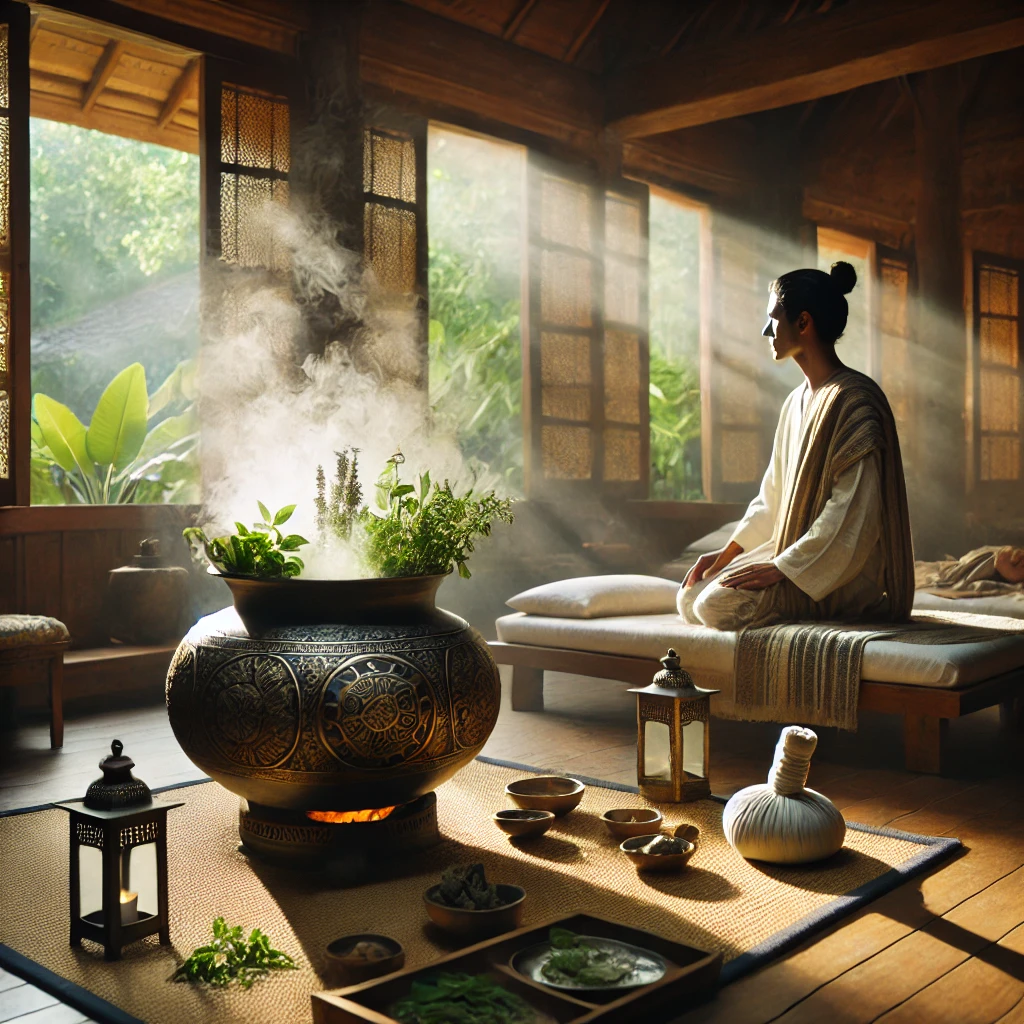
A conceptual illustration of a traditional Swedana procedure:
- Setting: A serene, softly lit Ayurvedic treatment room with natural wood accents and gentle sunlight filtering through large windows.
- Patient & Practitioner: A patient is comfortably reclined on a mat, partially draped with a light, breathable cloth. Nearby, an Ayurvedic practitioner, dressed in traditional attire, attentively oversees the procedure.
- Steam Therapy: In the foreground, a large, ornate pot filled with steaming water infused with various aromatic herbs (such as tulsi, ginger, and mint) releases gentle wisps of steam. The rising steam envelops the patient, symbolizing the detoxifying and therapeutic essence of the treatment.
- Atmosphere: The overall ambiance is calming and rejuvenating, reflecting the ancient Ayurvedic principles of balance and holistic healing.
This image is designed to capture the traditional, soothing, and therapeutic nature of the Swedana procedure.


dh73so