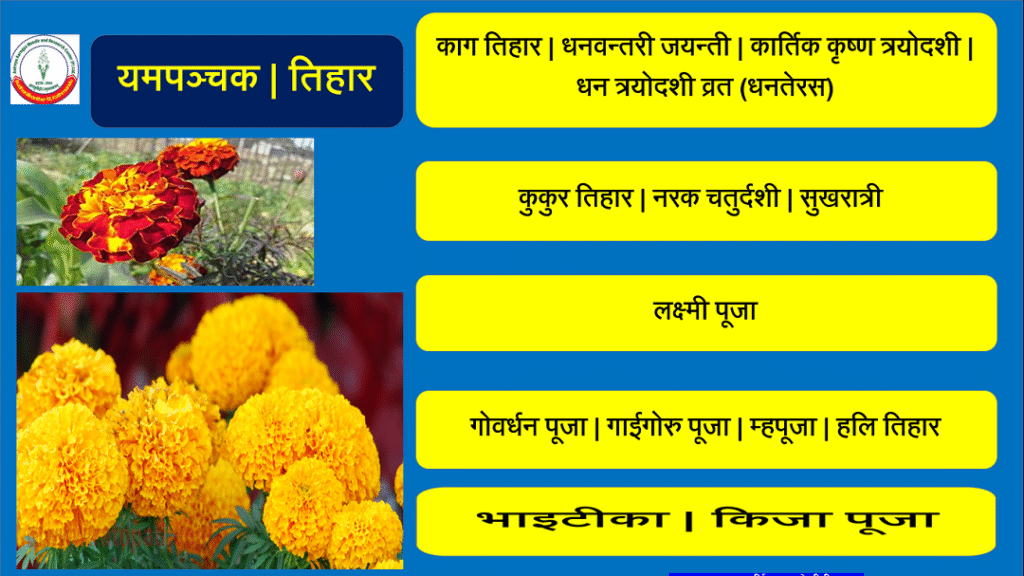

Tihar/Yama Panchaka (यमपञ्चक): The Festival of Life, Death and Dharma | Festival of Light
Table of Contents
Introduction
In Nepal and India, the festival of Tihar (also known as Deepawali) is celebrated for five days. The collective term for these five days is “Yama Panchaka” – where Yama refers to Yamaraja, the God of Death and Justice, and Panchaka means five days.
Hence, Yama Panchaka signifies the five sacred days dedicated to Yamaraja, reflecting the spiritual balance between life, death, duty, and affection.
The Five Days of Yama Panchaka
Kag Tihar (कागतिहार) – The Day of the Crow

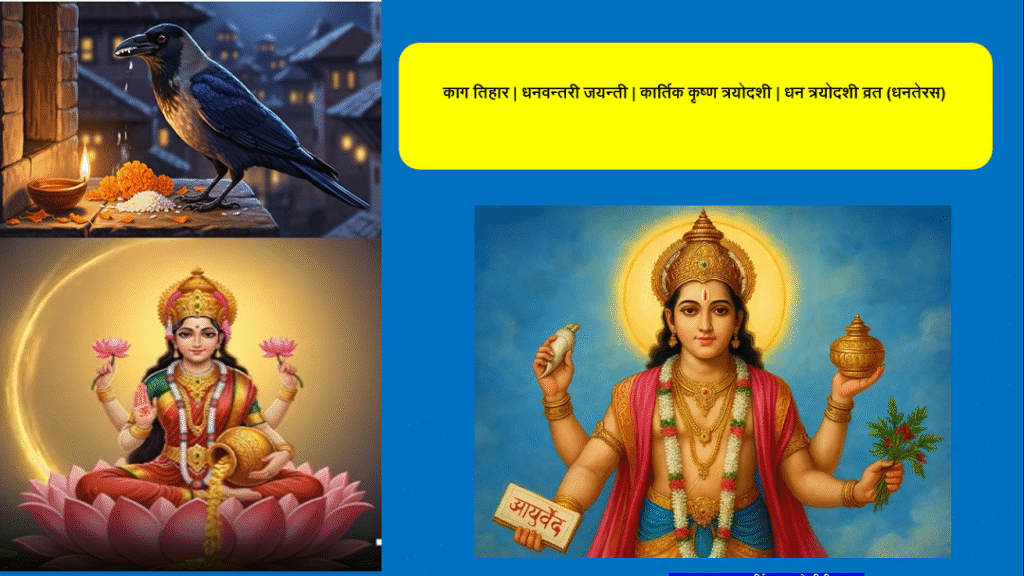
The first day honors the crow (Kaga), regarded as the messenger of Yamaraja.
Food is offered to crows early in the morning so that they bring good messages and ward off misfortune.
Philosophical meaning: The crow represents alertness, communication, and vigilance.
Kukur Tihar (कुकुर तिहार) – The Day of the Dog

The second day worships dogs, the loyal gatekeepers of Yamaraja.
Dogs symbolize loyalty, protection, and unconditional love.
They are adorned with garlands, Teeka (vermilion mark), and offered delicious meals.
Philosophical meaning: Respect for loyalty and service.
Laxmi Pooja (लक्ष्मीपूजा) – The Day of Prosperity
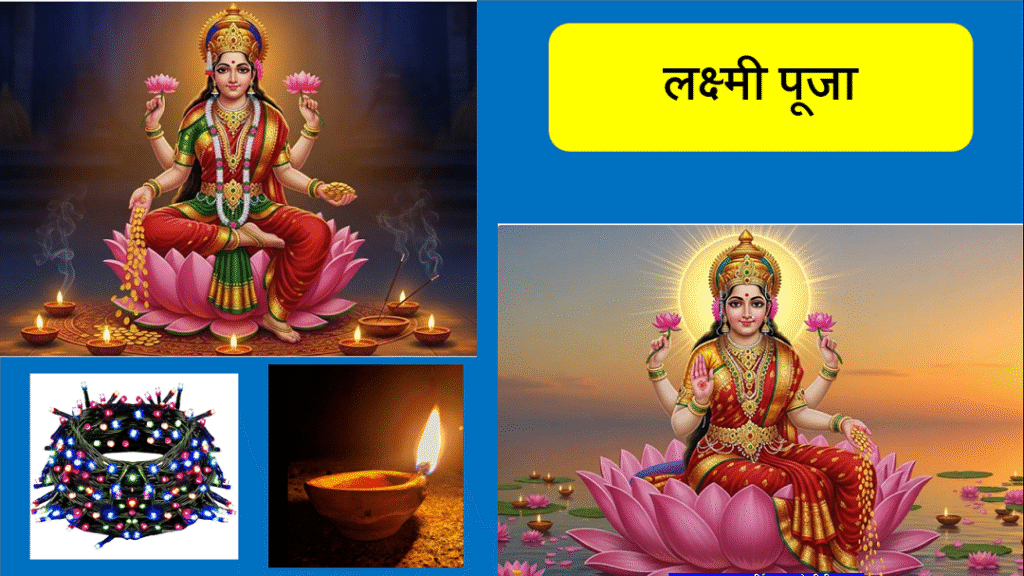
The third day, also known as Deepawali, is dedicated to Goddess Laxmi, the goddess of wealth and purity.
Homes are cleaned, decorated, and illuminated with oil lamps and candles to invite prosperity.
Philosophical meaning: True wealth lies in inner purity, knowledge, and righteousness.
Govardhan Pooja / Goru Tihar (गोवर्धन पूजा/गोरु पूजा) – The Day of the Ox
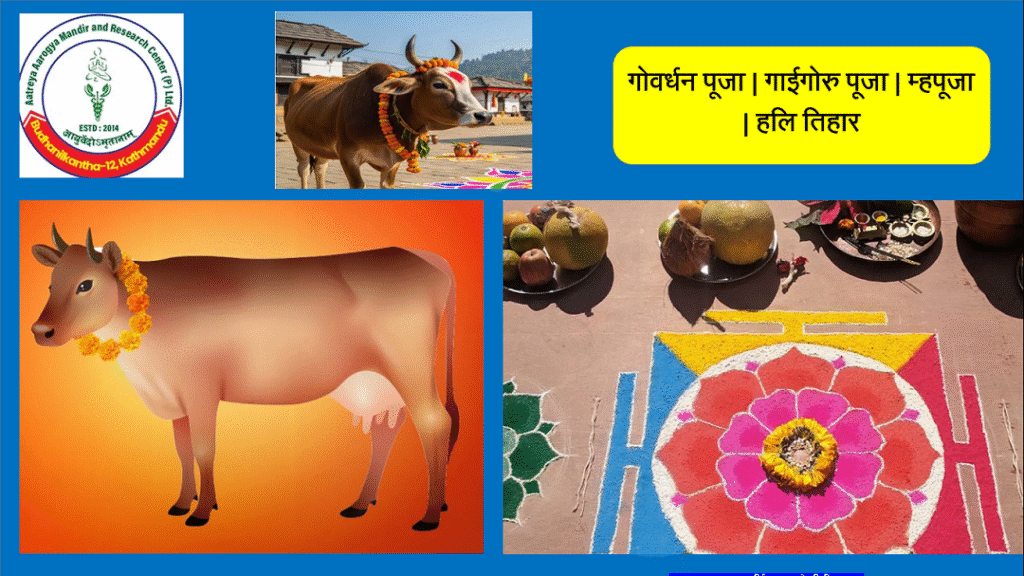
The fourth day honors the ox (Goru) and Govardhan mountain, symbols of strength, labor, and nature.
Farmers decorate and worship their oxen in gratitude for their hard work in agriculture.
Philosophical meaning: Respect for labor, ecology, and sustainable coexistence.
Bhai Teeka (भाइटीका ) – The Day of Sibling Bond

The fifth day, known as Bhai Teeka or Bhratri Dwitiya, celebrates the sacred bond between brothers and sisters.
Sisters apply a seven-colored Teeka on their brothers’ foreheads, wishing them long life and prosperity.
Brothers, in turn, vow to protect and honor their sisters.
Philosophical meaning: Love, duty, and mutual respect strengthen family and society.
The Legend of Yamaraja and Yamuna
According to Hindu scriptures, Yamaraja’s sister Yamuna (Yam Dwitiya) invited her brother for a feast.
When Yamaraja arrived, she greeted him with love, applied a Teeka, and prayed for his well-being.
Pleased, Yamaraja granted her a boon:
“Any brother who receives Teeka from his sister on this day shall have long life and happiness.”
From that moment, the tradition of Bhai Teeka and the celebration of Yama Panchaka began.
Ayurveda Significance of Yama Panchaka
According to Ayurveda, Yama Panchaka occurs during the transition between Sharad (autumn) and Hemanta (early winter) seasons – a crucial time for maintaining health and balance.
National Ayurveda Day Nepal/Dhanavantari Jayanti
The day of Dhanteras is also observed as Dhanvantri Jayanti, the birth anniversary of the God of Ayurveda. It is said that Lord Dhanvantari emerged towards the end of the Sagar Manthan when the Devas and Asuras were churning the sea, with the nectar of immortality (Amrit). The National Ayurveda Day is celebrated every year on the occasion of Dhanwantari Jayanti (Dhanteras) since 2016.
In Nepal it is celebrated as National Health Day since Dhanteras is a festival observed in the Hindu month of Kartik (usually October or November). Lord Dhanvantari is considered as divine propagator of Ayurveda. There is a religious statement that Lord Dhanvantari appeared with nectar, Sankh, Chakra and herbs while churning the sea on this day i.e. on the Triodashi of Kartik Krishna Paksha.
Dhanatrayodashi (Sanskrit: धनत्रयोदशी), also known as Dhanteras (Hindi: धनतेरस) , is the first day that marks the festival of Deepawali or Tihar in most of India and Nepal.
Health insights
The body needs pitta pacification and Vata stabilization.
Foods rich in sweetness, warmth, and nourishment – like milk, ghee, nuts, fruits, and sweets — are beneficial.
Lighting oil lamps (Deepa) purifies the air and balances the mind.
The ritual Teeka made of sandalwood, rice, and flowers enhances mental calmness and spiritual harmony.
Cultural and Social Messages of Yama Panchaka

Philosophical Essence
Yama Panchaka conveys the eternal truth that:
“Death is inevitable, but righteousness, love, and duty transcend mortality.”
It upholds the principle:
“Yam dharmasya moolam” – Dharma is the root of Yama (righteous existence).
The celebration is not about fear of death, but about living meaningfully, ethically, and compassionately.
Conclusion
Yama Panchaka is not merely a festival; it is a spiritual reflection on the cycle of life and death, and a reminder that light conquers darkness through knowledge, compassion, and self-discipline.
It teaches that life attains divine balance when five dimensions —
Nature, Labor, Wealth, Family, and Dharma — coexist harmoniously.
When these are aligned, the true light of Deepawali shines within and around us.
Sacred Verse
“Yamam smaret dharma-patham charantam,
Mrityor api jayate sa dharmi.”
(He who walks on the path of righteousness conquers even death.)


