

Adharaniya Vega in Ayurveda


Suppressed Desires and Their Consequences: Ayurveda Perspective on Adharaniya Vega and Human organ Frustration
Table of Contents
धिमान् (बुद्धिमानी/समझदार) मानिसले शरीरमा उत्पन्न भएका कुनै पनि स्वाभाविक वेगहरू (प्राकृतिक प्रेरणा/urge) लाई रोक्नु हुँदैन।
न वेगवान् धारयेद धीमाञ्जतान् मूत्रपुरीषयो:।
न रेतसो न वातस्य न छर्द्या: क्षवथोर्न च ।।
नोदगारस्य न जृम्भाया न वेगान् क्षुत्पिपासयो: ।
न वाष्पस्य न निद्राया नि:श्वासस्य श्रमेण च ।। चरक संहिता सूत्रस्थान नवेगान्धारणीयाध्याय
१३ प्रकारका अधारणीय वेग
मूत्र (पिसाब) को वेग
पुरीष (दिशा) को वेग
रेत: (वीर्य स्खलनको वेग)
वात (ग्यास/डकार/फुल्ने वायु सम्बन्धी वेग)
छर्दि (बान्ता) को वेग
क्षवथु (हाछ्यूँ) को वेग
उद्गार (डकार) को वेग
जृम्भा (हाई) को वेग
क्षुत् (भोक) को वेग
पिपासा (तिर्खा) को वेग
वाष्प (घाम–न्यानोमा पसिना/बाफ निस्कने वेग)
निद्रा (निद्रा)
नि:श्वास (गहिरो सास-प्रश्वासको स्वाभाविक वेग) – विशेषगरी थकाइ र श्रमका कारण उत्पन्न भएको श्वासको वेग
यी कुनै पनि प्राकृतिक वेगहरूलाई जबरजस्ती दबाउनु हुँदैन।
A wise person should never suppress the natural urges of the body, such as:
The urge for urination and defecation
The urge related to semen (ejaculation)
The natural urges of flatus/gas (Vata)
Vomiting
Sneezing
Belching
Yawning
The urges of hunger and thirst
The urge related to sweating/steam (Vashpa)
Sleep
The natural urge of breathing-especially when it arises due to fatigue or exertion
None of these natural bodily urges should be forcibly held back.
“मानिसले मनले चाहेको पाएन वा पुरा भएन भने कुण्ठा उत्पन्न हुन्छ” आयुर्वेद मा बताइएको अधारणीय वेगमा आधारमा तत्तत वेग मा शरीर ले जाहेर गर्ने इच्छा पुरा नहुदा पर्ने शारीरिक, मानसिक, भावनात्मक र संवेगात्मक प्रभाव
Introduction
Ayurveda deeply understands human psychology and physiology through the concept of Vega—natural urges that arise automatically within the body and mind. The classical texts state a clear principle:
“मानिसले मनले चाहेको पाएन वा पूरा भएन भने कुण्ठा उत्पन्न हुन्छ।”
When a person does not receive what the mind desires or when desires remain incomplete, frustration develops.
This emotional reality parallels the Ayurveda doctrine of Adharaniya Vega—natural urges that should never be suppressed. Ayurveda teaches that suppression of these urges disturbs both Soma (mind) and Sharira (body), leading to wide-ranging negative effects.
This article explores how the body expresses natural impulses, what happens when they are denied, and how unfulfilled desires create physical, mental, emotional, and psychosomatic consequences.
Understanding Adharaniya Vega in Ayurveda
Adharaniya Vega means “non-suppressible natural urges.”
These urges include physiological expressions such as:
Urination
Defecation
Sneezing
Hunger
Thirst
Sleep
Tears (crying)
Cough
Breathing effort
Ejaculation
Vomiting
Gas release
and psychological urges like desire for love, appreciation and emotional expression
According to Ayurveda, suppressing these natural expressions obstructs the free flow of Vata, leading to systemic imbalance.
Physical Consequences of Suppressing Natural Urges
Gastrointestinal Disturbances
When urges related to hunger, thirst, or defecation are ignored, the digestive fire (Agni) becomes impaired. This leads to:
Chronic constipation
IBS-like symptoms
Acid reflux
Bloating and abdominal pain
Accumulation of toxins (Ama)
Ayurveda clearly states that suppressing the urge to pass stool or gas disturbs Apana Vayu, the downward-moving energy responsible for elimination.
Respiratory and Neurological Effects
Suppressing sneezing, coughing, or yawning disrupts Prana Vayu, affecting:
Headaches
Sinus congestion
Dizziness
Difficulty concentrating
Nervous system fatigue
Cardiovascular and Musculoskeletal Stress
Unfulfilled urges-both physiological and emotional-cause sympathetic overdrive, resulting in:
Elevated heart rate
Hypertension tendencies
Muscle tension
Joint stiffness
Neck and back pain
Suppression creates chronic Vata aggravation, making the body stiff, dry, and fatigued.
Sexual and Reproductive Disturbances
Suppressing sexual urges or emotional intimacy can contribute to:
Loss of libido
Premature ejaculation
Erectile difficulty
Menstrual irregularities
Hormonal imbalance
Ayurveda recognizes sexual expression as a natural urge, essential for reproductive health and emotional balance.
Mental and Psychological Consequences
Frustration (Kuntha / Krodha)
Ayurveda states that when desires remain unfulfilled, psychological pressure builds up, manifesting as:
Irritability
Sudden anger
Mood instability
Emotional withdrawal
This aligns with the classical concept of Manasika Vega, the mental impulses that should not be oppressed.
Anxiety and Restlessness
Unexpressed urges disturb Rajas, creating:
Overthinking
Nervousness
Worry
Fear of failure
Long-term suppression converts into Vata-type anxiety disorders.
Depression and Low Motivation
When emotions like sadness, crying, affection, or love are suppressed:
Emotional numbness
Loss of enthusiasm
Low self-worth
Mild to moderate depression
Crying (Ashru Vega) is a natural outlet. Its suppression blocks emotional detoxification.
Emotional and Social Consequences
Emotional Congestion
Humans naturally express:
Joy
Love
Anger
Pain
Affection
Connection
Suppressing these creates internal conflict, known in Ayurveda as Vega Dharana, leading to:
Resentment
Emotional suffocation
Passive-aggressive behavior
Relationship friction
Breakdown of Communication
People who consistently suppress natural emotional urges may:
Fail to express their needs
Become emotionally distant
Develop communication barriers
Feel misunderstood or undervalued
This affects family, marital, and social connections.
Loss of Emotional Intelligence
Blocking emotional expression dulls:
Empathy
Intuition
Self-awareness
Social understanding
Ayurveda teaches that healthy emotional flow is essential for stable mental health.
Psychosomatic and Behavioral Consequences
When suppressed urges accumulate, they manifest as psychosomatic disorders, such as:
Tension headaches
Gastritis
Insomnia
Panic tendencies
Chronic fatigue
Eating disorders
Substance craving
Behavioral imbalance (irritability, compulsions)
This results from disturbed Manovaha Shrota (channels of the mind).
Why the Body Produces Urges: Ayurveda Logic
Ayurveda views urges as messages from the body, indicating internal needs:
Hunger → need for nourishment
Thirst → need for hydration
Crying → need for emotional release
Sleep → need for restoration
Urination/defecation → removal of toxins
Sexual urge → hormonal and emotional balance
Denying these needs is equal to denying the body’s intelligence.
Ayurveda’s Recommendation: Honor the Body’s Signals
Ayurveda instructs:
“Vega not to be suppressed must be expressed in a balanced, mindful manner.”
This prevents:
Vata aggravation
Emotional stagnation
Mental stress
Psychosomatic disorders
Healthy expression is part of Sadvritta, the Ayurveda code of right living.
The clinical consequences of suppressing each natural urge (वेगधारणका चिकित्सकीय परिणाम )
Here are the clinical consequences of suppressing each natural urge (वेग) exactly as explained in Ayurveda (primarily Charaka Samhita – Sutrasthana 7, Navegandharaniya Aadhyaya), with complete list with Ayurveda pathophysiology & modern correlations
मूत्रवेग धारणा – Suppressing Urination

Consequences:
Suprapubic pain
Lower abdominal distension
Burning micturition
Urinary infection (UTI)
Kidney/ureteric stress
Vata prakopa → bladder dysfunction
Modern correlation: UTI, cystitis, urinary retention
पुरीषवेग धारणा – Suppressing Defecation

Consequences:
Constipation, dryness of stool
Abdominal pain, bloating
Fissure, piles
Vata imbalance
Headache, indigestion
Modern correlation: IBS, chronic constipation, hemorrhoids
रेतोवेग धारण – Suppressing Semen/Ejaculatory urge
Consequences:
Pain in genital organs
Perineal heaviness
Testicular pain
Urinary discomfort
Reduced libido
Psychological irritability
Modern correlation: Prostatitis, sexual dysfunction, pelvic congestion
वातवेग धारण – Suppressing Gas/Flatus
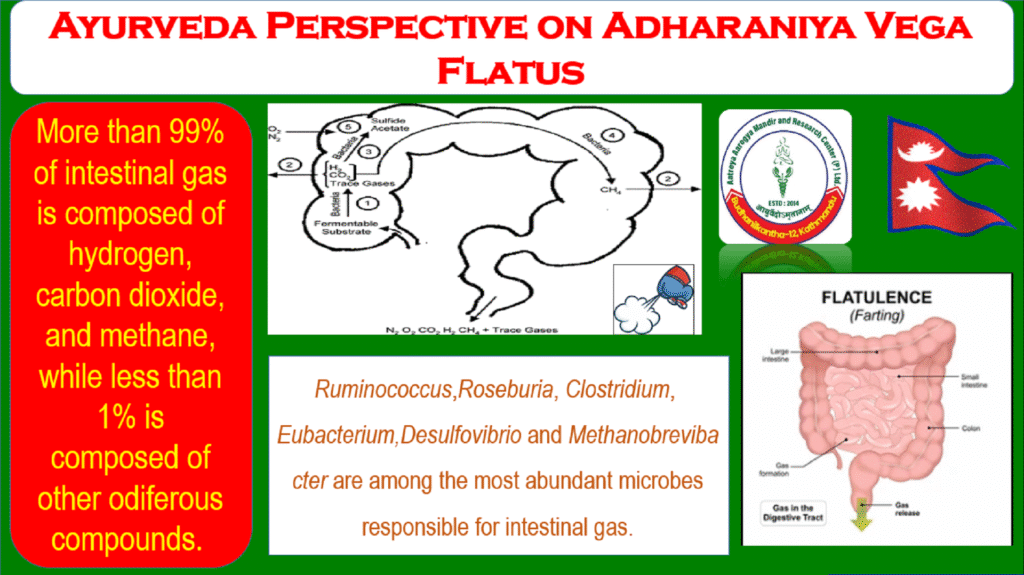
Consequences:
Severe bloating
Abdominal cramps
Flatulence trapped → colic
Loss of appetite
Vata Prakopa → constipation
Modern correlation: Gas retention, colic, constipation
छर्दिवेग धारण – Suppressing Vomiting

Consequences:
Hiccups
Dyspnea
Nausea worsening
Facial discoloration
Toxaemia
Aggravation of Kapha and Pitta
Modern correlation: Aspiration risk, gastric distress, nausea
क्षवथुवेग धारणा – Suppressing Sneezing
Consequences:
Headache
Stiff neck
Facial paralysis risk
Vata obstruction in head
Sinus congestion
Modern correlation: Migraine trigger, sinusitis flare-up
उद्गारवेग धारणा – Suppressing Belching
Consequences:
Chest heaviness
Hiccups
Heartburn
Difficulty in breathing
Bad breath
Modern correlation: GERD, dyspepsia
जृम्भावेग धारणा – Suppressing Yawning

Consequences:
Stiffness of neck & jaw
Ear blockage
Fatigue
Vata aggravation in head/neck
Modern correlation: TMJ strain, fatigue
क्षुत्वेग धारणा — Suppressing Hunger

Consequences:
Loss of appetite
Gastric irritation
Weakness
Malabsorption
Vata & Pitta imbalance
Modern correlation: Gastritis, hypoglycemia, anorexia
पिपासावेग धारणा – Suppressing Thirst
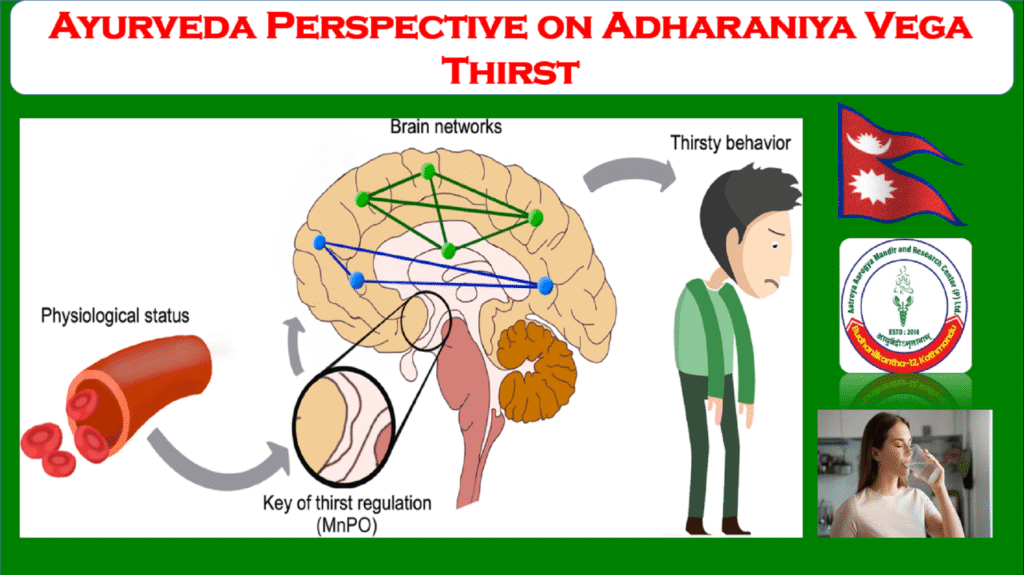
Consequences:
Dry mouth
Dizziness
Weakness
Fever
Fatigue
Vata–Pitta increase
Modern correlation: Dehydration, heatstroke
वाष्प/स्वेदवेग धारणा – Suppressing Sweat
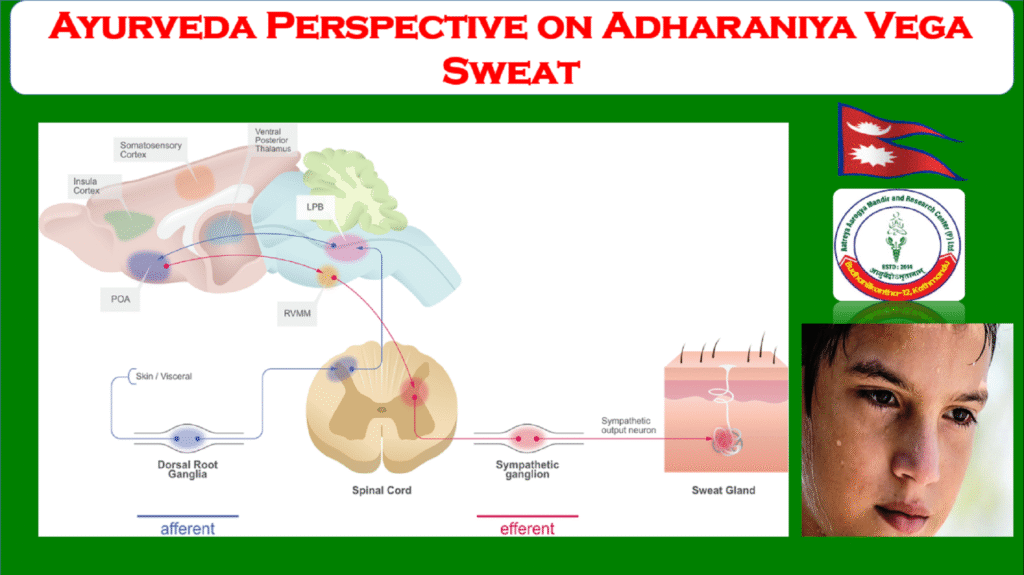
Consequences:
Obstruction in channels (srotorodha)
Skin irritation
Burning sensation
Fever
Stiffness
Modern correlation: Heat rash, overheating, fatigue
निद्रावेग धारणा – Suppressing Sleep
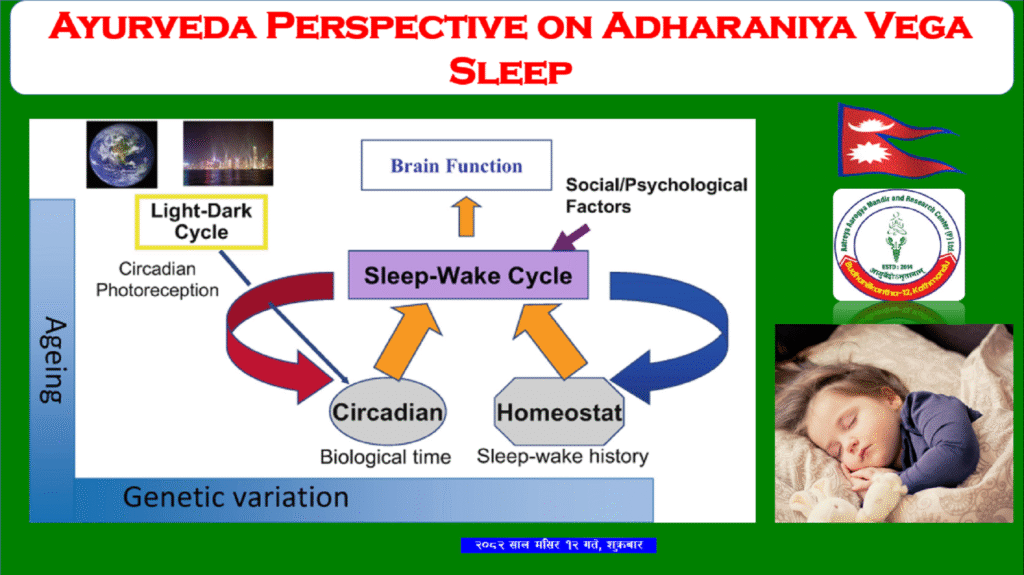
Consequences:
Anger, irritability
Lack of clarity
Body pain
Heaviness of head
Neurological fatigue
Vata aggravation
Modern correlation: Insomnia, mood disorders, cognitive decline
श्वासवेग धारण – Suppressing deep breathing (especially fatigue-induced)

Consequences:
Breathlessness
Chest discomfort
Anxiety
Vata imbalance
Fatigue worsening
Modern correlation: Anxiety episodes, poor oxygenation
अश्रुवेग धारण (Suppressing the urge of Tear)

Conclusion
The principle “unfulfilled desires create frustration” directly connects with Ayurveda’s teaching on Adharaniya Vega. Human health depends on the smooth expression of natural urges—physical, mental, emotional, and social. Suppression disrupts Vata, blocks emotional flow, and triggers a chain of physical and psychological disturbances.
Honoring the body’s natural signals is not indulgence-it is Ayurveda wisdom for holistic well-being.
Summary Table

Adharaniya Vega in Ayurveda Adharaniya Vega in Ayurveda Adharaniya Vega in Ayurveda Adharaniya Vega in Ayurveda Adharaniya Vega in Ayurveda Adharaniya Vega in Ayurveda Adharaniya Vega in Ayurveda Adharaniya Vega in Ayurveda Adharaniya Vega in Ayurveda Adharaniya Vega in Ayurveda Adharaniya Vega in Ayurveda Adharaniya Vega in Ayurveda Adharaniya Vega in Ayurveda Adharaniya Vega in Ayurveda


