

Namaskar from Back Side Yoga – The Reverse Prayer Pose for Grace, Flexibility and Balance
Table of Contents
“Namaskar from Back Side Yoga” – popularly known as Pashchima Namaskar or Reverse Prayer Pose – is a graceful yet powerful yoga posture that combines flexibility, balance, strength, and inner awareness. In Sanskrit, Pashchima means “back” and Namaskar means “salutation” or “prayer.”
This asana is also known as Penguin Pose or Reverse Namaste Pose in modern yoga.


Introduction
In traditional yoga, Namaskar Mudra symbolizes gratitude, humility, and union of opposites — the meeting of the right and left energy channels (Pingala and Ida).
When performed from the back side, this pose opens the shoulders, chest, heart chakra (Anahata), and enhances posture correction — especially useful for people with rounded shoulders, desk jobs, or emotional stiffness.
Synonyms
Namaskar from Back Side Yoga
Reverse Prayer Pose
Pashchima Namaskar Yoga
Shoulder opening yoga
Heart chakra yoga
Yoga for posture correction
Step-by-Step Method
Starting Position
Stand in Tadasana (Mountain Pose): feet together, spine erect, arms relaxed beside the body.
Breathe deeply and center your awareness.
Hand Placement
Bring your arms behind the back.
Bend elbows slightly and rotate the shoulders outward.
Join your palms together behind the spine in the prayer position (Namaskar Mudra).
Fingers should point upward and palms pressed firmly together if possible.
If full Namaskar is difficult, keep fingertips or backs of the hands together to start.
Alignment
Keep the chest open and spine straight.
Draw shoulders back and down.
Keep the head in line with the spine, chin parallel to the ground.
Breathing
Inhale slowly through the nose, expanding the chest.
Exhale, feeling the shoulder blades gently pressing toward each other.
Hold the posture for 30 seconds to 1 minute initially.
Gradually increase to 2–3 minutes with regular practice.
Releasing
Slowly release the hands, bring them forward, and relax the shoulders.
Shake your hands gently to relax the muscles.
Beginners’ Steps and Modifications
For those new to yoga or with shoulder stiffness:
Start by holding opposite elbows behind your back instead of joining palms.
You can use a yoga strap or towel between the hands to assist.
Practice shoulder mobility exercises such as Gomukhasana arms or shoulder rotations daily.
Gradually progress to full Reverse Namaskar as flexibility improves.
Precautions and Contraindications
Avoid or modify the posture if you have:
Shoulder or wrist injury
Severe arthritis or frozen shoulder
Recent chest or upper back surgery
High blood pressure (avoid long hold)
Pregnancy (late trimester) – may strain the abdomen
Always warm up before performing this asana and avoid forcing your joints.
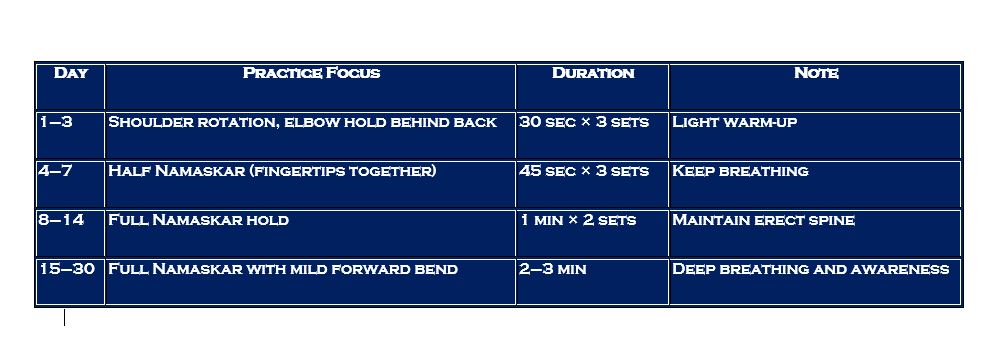
Step-by-Step Progression (For Daily Practice)
Physical Benefits
Opens chest and shoulders, correcting rounded shoulders and forward neck posture
Improves lung capacity and breathing efficiency
Enhances flexibility of wrists, forearms, and shoulders
Strengthens upper back and spine muscles
Helps relieve back stiffness and fatigue
Tones arms and upper body gently
Mental and Emotional Benefits
Stimulates the Anahata (Heart Chakra) – promoting love, compassion, and acceptance
Improves confidence and self-expression
Reduces stress, anxiety, and emotional blockage
Brings balance between humility and self-esteem
Ayurveda Perspective
According to Ayurveda, this pose balances Vata and Kapha doshas by improving circulation and chest expansion.
It enhances Prana Vayu (vital energy of the heart and lungs) and harmonizes Sadhaka Pitta, which governs emotional clarity.
Performing Pashchima Namaskar at Brahmamuhurta (early morning, 4–6 AM) with slow, rhythmic breathing nourishes Ojas, the essence of vitality and immunity.
Spiritual Significance
The reverse Namaskar is symbolic of offering gratitude inwardly – not to the outer world but to one’s own higher self.
It teaches surrender, awareness, and humility — the true essence of Yoga.
Conclusion
“Namaskar from Back Side Yoga” (Pashchima Namaskar) is a beautiful integration of physical discipline, emotional balance, and spiritual awareness.
Whether you are a beginner or an advanced practitioner, including this asana in your daily practice improves posture, lung health, self-confidence, and inner peace.
Practice with awareness, breathe with love, and offer your Namaskar — from the heart, through your back.
Quick Summary

Namaskar from Back Side Yoga Namaskar from Back Side Yoga Namaskar from Back Side Yoga Namaskar from Back Side Yoga Namaskar from Back Side Yoga Namaskar from Back Side Yoga Namaskar from Back Side Yoga Namaskar from Back Side Yoga


