


Table of Contents
Definition
Oja is considered the essence of vitality, immunity, and overall well-being. It is the supreme extract of the seven bodily tissues (Dhatus) and is responsible for strength, endurance, immunity, radiance, and mental clarity. A person with abundant of it exhibits vigor, positivity, and resistance to diseases.
Origin and Nature
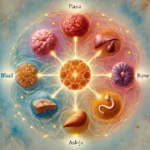
According to Ayurveda, the human body comprises seven primary tissues (Sapta Dhatu):
Rasa (Plasma)
Rakta (Blood)
Mamsa (Muscle)
Meda (Fat)
Asthi (Bone)
Majja (Bone marrow)
Shukra (Reproductive fluid)
When these tissues are well-nourished and function optimally, they produce Oja, which is the purest essence of nutrition and vitality. It is classified into two types:
Para – It is stored in the heart, with a subtle quantity of eight drops, is crucial for life.
Apara – It circulates throughout the body and supports various physiological and mental functions.
Functions
It plays a crucial role in maintaining:
Immunity and disease resistance – Protects the body from infections and illnesses.
Strength and endurance – Enhances physical stamina and resilience.
Radiance and glow – Gives a healthy, vibrant complexion.
Mental stability and clarity – Promotes peace, happiness, and confidence.
Longevity and vitality – Sustains life force and delays aging.
Causes of Depletion
Several factors can lead to the depletion:
Excessive physical exertion and stress
Sleep deprivation or irregular sleep patterns
Unhealthy diet and malnutrition
Emotional stress, anxiety, grief, or depression
Excessive sexual activity or loss of reproductive fluids
Chronic illnesses and infections
Consumption of toxins, alcohol, and drugs
Ways to Enhance
To preserve and enhance , Ayurveda recommends:
Sattvic diet – Eating pure, wholesome, and nourishing foods such as:
Milk, ghee, honey, almonds, dates, figs, and Chyawanprash (a rejuvenating Ayurvedic tonic).
Balanced lifestyle – Following daily routines (Dinacharya) and seasonal regimens (Ritucharya).
Ayurveda herbs – Using Ashwagandha, Shatavari, Brahmi, Chandan, Musli, and Punarnava to boost it.
Quality sleep – Going to bed before 10 PM and waking up at Brahma Muhurta (before sunrise).
Mental stability – Practicing meditation, Pranayama, positive thinking, and social harmony.
Signs of Depletion
When it is low, a person may experience:
Fatigue, weakness, and lack of energy
Dull, lifeless skin and loss of radiance
Mental restlessness, anxiety, and insomnia
Weak immune system and frequent illnesses
Dry and dehydrated body tissues
Correlation with Spirituality
In Ayurveda, it is linked to spiritual energy. Practices like meditation, chanting (Japa), fire rituals (Yajna), and ethical living enhance it. Those who lead a disciplined and moral life tend to have higher, which manifests as longevity, happiness, and mental stability.
Conclusion
Ojas is the foundation of health, vitality, and immunity in Ayurveda. To live a disease-free and energetic life, one must protect and nourish it through a balanced diet, a healthy lifestyle, yoga, meditation, and positive thinking. By cultivating it, one can achieve a harmonious and fulfilling life, full of strength and radiance.
Oja & Immunity: Ayurveda vs. Modern Medicine
Oja in Ayurveda
In Ayurveda, Ojas is the essence of all bodily tissues (dhatus), representing vitality, strength, and immunity (vyadhikshamatva). It is the final refined product of proper digestion, metabolism, and balanced dosha. Oja is classified into:
Para – Supreme vitality, located in the heart (8 drops).
Apara – Circulates throughout the body, ensuring immunity and strength.
A healthy individual has Oja in an optimal state, while depletion (Oja kshaya) leads to weakness, disease susceptibility, and even death. Ayurveda links Oja to:
Bala (Strength & Immunity) – Three types: Sahaja (genetic), Kalaja (age-related), and Yuktikrita (acquired).
Vyadhikshamatva (Disease Resistance) – Innate & adaptive immunity-like concepts.
Rasa Dhatu & Digestion – Proper Agni (digestive fire) ensures strong Oja, while weak digestion leads to low immunity.
Immunity in Modern Medicine
Modern medicine defines immunity as the body’s ability to resist infections and diseases. It is classified into:
Innate Immunity – The first line of defense (e.g., skin, mucosa, phagocytes).
Adaptive Immunity – Acquired over time through exposure to pathogens or vaccination, involving B-cells (antibodies) and T-cells (cell-mediated immunity).
Immunomodulation – Influenced by nutrition, lifestyle, stress, and gut microbiota.
Factors like oxidative stress, chronic inflammation, and autoimmunity affect immunity, similar to Oja Vikriti in Ayurveda.
Correlation: Ayurveda vs. Modern Medicine
| Aspect | Ayurveda (Oja) | Modern Medicine (Immunity) |
|---|---|---|
| Source | Ultimate essence of dhatus | Bone marrow, thymus, lymphoid organs |
| Function | Provides vitality, strength, & disease resistance | Protects against infections & diseases |
| Classification | Para Oja, Apara Oja | Innate & Adaptive Immunity |
| Depletion Causes | Stress, poor digestion, infections, emotional distress (Oja Kshaya) | Malnutrition, chronic disease, autoimmunity |
| Enhancement | Rasayana, balanced diet, good sleep, mental calmness | Nutrition, exercise, sleep, vaccines |
| Disorders | Ojo Kshaya (low immunity), Ojovyapat (autoimmune) | Immunodeficiency, autoimmunity, allergies |
Ayurveda Strategies for Enhancing Immunity (Oja Vardhaka Chikitsa)
Rasayana Therapy (Chyavanprash, Ashwagandha, Guduchi, Shatavari, Amla).
Shadarasa Diet & Digestion (Agni Deepana, avoiding junk food).
Dinacharya & Ritucharya (Circadian rhythm, seasonal adaptation).
Yoga & Meditation (Stress management & immune modulation).
Panchakarma Detox (Cleansing toxins affecting immunity).
Conclusion
Ayurveda views Oja as the core of immunity, aligning with modern concepts of immune strength. While modern medicine focuses on biochemical mechanisms like immune cells and antibodies, Ayurveda takes a holistic approach, emphasizing lifestyle, digestion, and mental well-being. Integration of both systems can lead to a comprehensive approach to immunity enhancement.