


Table of Contents
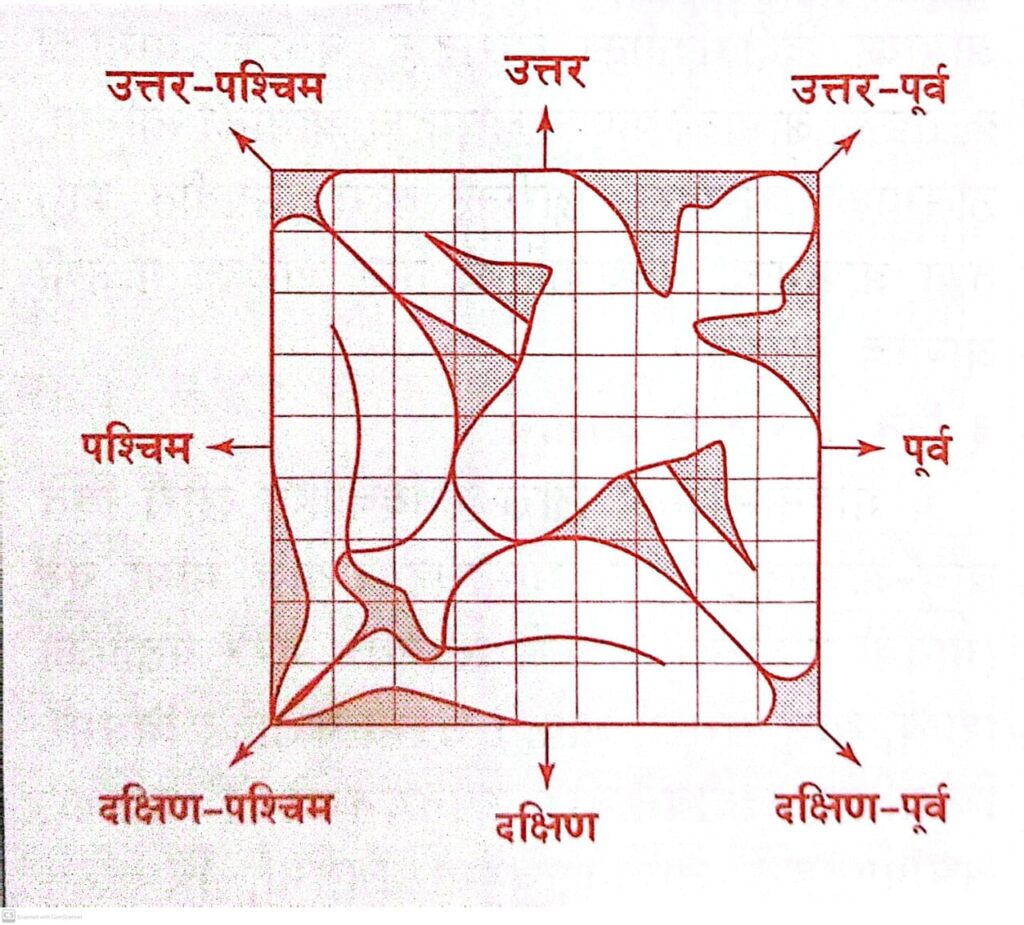
The Ten Directions: The concept of directions has been significant in human civilization since ancient times. In Vedic literature, astrology, Vastu Shastra, yoga, and tantric traditions, directions play a crucial role. While we commonly recognize four cardinal directions (East, West, North, and South) and four intermediate directions (Northeast, Southeast, Southwest, and Northwest), the idea of ten directions is completed by adding the upward (Urdhva) and downward (Adhah) directions.
The Ten Directions and Their Significance
The ten directions are extensively mentioned in ancient scriptures and hold scientific, spiritual, health-related, and cultural importance.
East (Purva)
The direction of the rising sun, symbolizing knowledge, energy, health, and spiritual progress.
In Vastu Shastra, east-facing houses are considered auspicious.
Ayurveda recommends practicing meditation while facing the east during Brahmamuhurta for physical and mental well-being.
West (Paschima)
The direction of the setting sun, associated with closure and rest.
It is favorable for deep meditation and introspection.
According to Vastu, placing water sources in this direction may bring negative effects.
North (Uttara)
Represents wealth, prosperity, and positive energy.
Lord Kubera, the deity of wealth, is believed to reside in the north.
Facing north while meditating is said to enhance spiritual growth.
South (Dakshina)
Associated with Lord Yama (the god of death) and the journey beyond life.
In Vastu, south-facing houses are generally considered inauspicious.
Spending excessive time facing south may impact mental and physical health.
North-East (Ishaana)
Considered the direction of wisdom, spirituality, and positive energy.
Ideal for placing a prayer room or water sources.
Health-wise, this direction is believed to channel vital energy into the body.
South-East (Agneya)
Ruled by the fire element, making it suitable for kitchens and sacred spaces.
In Ayurveda, practicing yoga or pranayama in this direction is said to improve digestion.
South-West (Nairitya)
Symbolizes stability, security, and strength.
In Vastu, placing the master bedroom in this direction is considered beneficial.
It is believed to provide mental stability.
North-West (Vayavya)
Governs the movement of air and influences communication.
Beneficial for business growth and social relationships.
Meditating in this direction is said to have a calming effect on the mind.
Upward (Aakasha)
Represents the sky element and divine realms.
Associated with Brahmaloka (the realm of higher consciousness) and supreme wisdom.
Important for deep spiritual practices and transcendental meditation.
Downward (Patala)
Represents the earth element and the subconscious mind.
Related to death, rebirth, and self-reflection.
In yogic practices, the earth element plays a crucial role in grounding energy.
Scientific and Spiritual Influence of the Ten Directions
The ten directions are not merely conceptual; they have practical scientific relevance:
The east is energizing due to the sun’s rising rays, which refresh the body and mind.
The north has a magnetic influence that attracts wealth and positive energy.
Spending too much time in the south can have adverse effects on health and well-being.
The Role of the Ten Directions in Ayurveda and Yoga
Brahma Muhurta meditation facing the east enhances mental clarity.
Sleeping with the head facing south or west is considered beneficial.
Eating while facing north or east is recommended for good digestion.
Application of the Ten Directions in Vastu Shastra
Proper use of directions in home and office design can bring prosperity, peace, and good health.
The placement of temples, water sources, kitchens, and bedrooms is determined based on directional significance.
Conclusion
The ten directions are not just about geographical orientation; they are deeply connected to lifestyle, health, spirituality, Vastu Shastra, and scientific principles. Proper understanding and utilization of these directions can lead to a balanced, prosperous, and fulfilling life. Thus, awareness and application of the ten directions are essential for holistic well-being.


r4asj7