

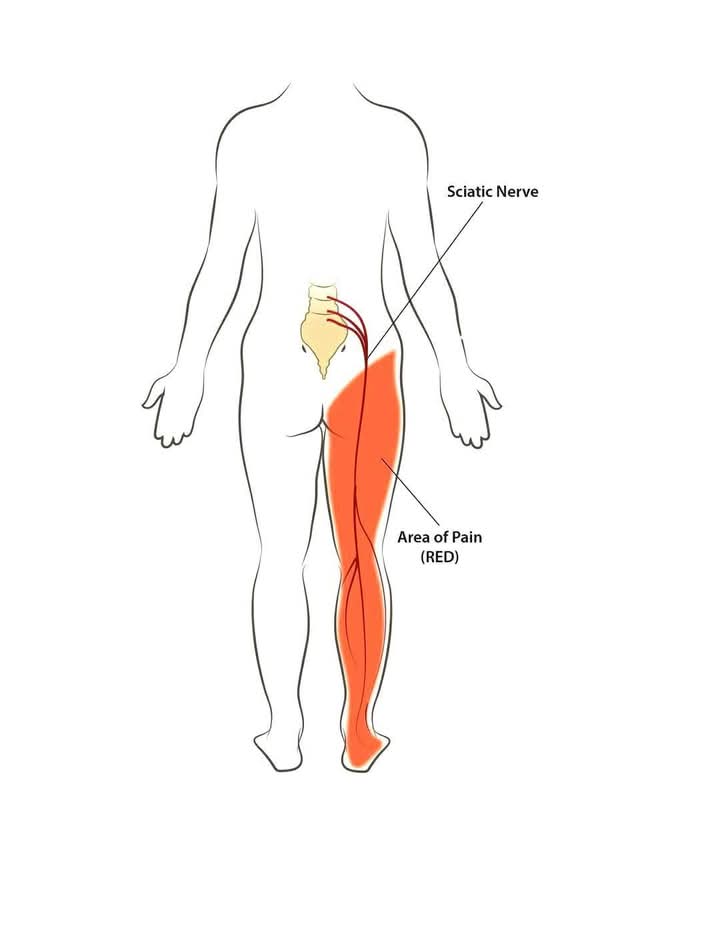
Sciatica: An Introduction
The sciatic nerve is the largest and longest nerve in the human body, starting from the lower spine (lumbar region), passing through the buttocks, down the back of the leg, and into the foot. When this nerve experiences compression, irritation, inflammation, or injury, it leads to a condition commonly called sciatic nerve pain or simply sciatica.
It is important to understand that sciatica is a symptom, not a disease, often resulting from an underlying condition.
Causes
Sciatic nerve pain can be caused by several underlying issues:
Herniated Disc: A slipped or ruptured spinal disc pressing on the nerve.
Spinal Stenosis: Narrowing of the spinal canal, putting pressure on the nerve.
Degenerative Disc Disease: Age-related wear and tear on spinal discs.
Spondylolisthesis: A vertebra slipping over another.
Piriformis Syndrome: Compression of the sciatic nerve by the piriformis muscle in the buttocks.
Trauma or Injury: Accidents or injuries affecting the spine or pelvis.
Pregnancy: Increased weight and changes in the pelvis can compress the nerve.
Clinical Features
Key symptoms of sciatic nerve pain include:
Pain radiating from the lower back down to the buttock and back of one leg.
Burning or tingling sensation in the leg.
Numbness or weakness in the affected leg or foot.
Difficulty moving the leg or foot.
Pain that worsens with sitting, standing, or certain movements.
Risk Factors
Pain can vary from mild aches to sharp, burning, or even excruciating discomfort.
Factors that increase the likelihood of developing sciatica:
Age: Spinal changes associated with aging.
Obesity: Excess body weight stresses the spine.
Occupation: Jobs requiring heavy lifting, prolonged sitting, or awkward movements.
Lifestyle: Sedentary behavior and poor posture.
Diabetes: Increases risk of nerve damage.
Diagnosis
Diagnosing sciatic nerve pain involves:
Medical History and Physical Examination: Evaluating symptoms, reflexes, muscle strength, and sensory function.
Imaging Tests:
X-ray: To detect bone-related problems.
MRI: To visualize soft tissue and nerve compression.
CT Scan: Detailed cross-sectional images.
EMG (Electromyography): Measures electrical activity in muscles
Management
Treatment depends on the severity and cause of the sciatic pain.
Initial (Conservative) Treatments
Rest: Short periods of rest.
Hot or Cold Therapy: Ice packs or heat pads.
Over-the-Counter Medications: Ibuprofen, naproxen, etc.
Medications
Nonsteroidal anti-inflammatory drugs (NSAIDs).
Muscle relaxants.
Corticosteroid injections for severe inflammation.
Physical Therapy
Stretching and strengthening exercises.
Improving posture.
Spine stabilization training.
Surgery
If conservative treatments fail or there is significant nerve damage:
Microdiscectomy: Removing the part of the herniated disc pressing on the nerve.
Laminectomy: Removing bone spurs or part of the vertebrae.
Alternative Therapies
Acupuncture, acupressure.
Yoga and stretching.
Ayurvedic therapies like oil massage and Panchakarma.
Mindfulness meditation and breathing techniques.
Ayurveda Perspective
In Ayurveda, sciatic pain is known as Gridhrasi.
It is primarily caused by an imbalance of Vata Dosha (the energy of movement and nervous system control).
Management includes:
Snehana (Oil Massage): Using medicated oils.
Swedana (Fomentation): Therapeutic sweating.
Basti (Medicated Enemas): Specific to Vata disorders.
Ayurvedic Medicines: Such as Dashamoola Kwatha, Yogaraj Guggulu.
Diet and Lifestyle: Following a Vata-pacifying diet, avoiding cold, dry, and processed foods, regular exercise, and proper sleep.
Prevention
Regular exercise focusing on core strength and flexibility.
Maintaining correct posture while sitting and lifting.
Avoiding prolonged sitting or standing.
Maintaining a healthy weight.
Using supportive chairs and mattresses.
Avoiding smoking and alcohol.
Conclusion
Sciatic nerve pain can be highly debilitating but, with early diagnosis, appropriate treatment, and lifestyle modifications, it can be effectively managed and even prevented.
Integrating modern medicine with traditional practices like Ayurveda can provide a holistic and long-term solution.
Classification of Lumbar Spondylosis on the Basis of Severity of Symptoms
Introduction
Lumbar spondylosis refers to degenerative changes in the lumbar vertebrae, which include disc dehydration, spondylotic changes, osteophyte formation, and ligament thickening. These structural changes can lead to lower back pain, stiffness, restricted movement, weakness, and, in some cases, neurological symptoms such as numbness or tingling.
For effective management and treatment planning, it is essential to classify lumbar spondylosis based on the severity of symptoms. This approach helps determine appropriate interventions, from conservative management to surgical considerations.
- Mild Stage (Mild Symptoms)
Key Characteristics:
Occasional mild lower back pain.
Discomfort when sitting or standing for prolonged periods.
Feeling of fatigue or stiffness after activity.
No neurological symptoms like numbness or weakness.
Clinical Findings:
Mild tenderness during movement.
X-ray may show early degenerative changes such as mild disc space narrowing.
Management:
Lifestyle modifications (proper posture, ergonomic corrections).
Core strengthening and back flexibility exercises (yoga, physical therapy).
Pain management with mild analgesics or Ayurvedic therapies like Abhyanga (oil massage) and mild Swedana (sudation therapy).
- Moderate Stage (Moderate Symptoms)
Key Characteristics:
Pain becomes more frequent and interferes with daily activities.
Pain increases after prolonged sitting, standing, or sleeping.
Occasional radiating pain to buttocks or legs (radicular symptoms).
Mild sensory disturbances like numbness or tingling.
Clinical Findings:
Positive Straight Leg Raise Test indicating nerve root irritation.
MRI or CT scan may show disc protrusion, mild foramina stenosis, or facet joint arthropathy.
Management:
Structured physical therapy program.
Non-steroidal anti-inflammatory drugs (NSAIDs) for pain control.
Ayurvedic therapies:
Panchakarma techniques such as Kati Basti (Oil Pooling on the lower back), Patra Pinda Sweda (herbal bolus massage).
Adjunct modalities: TENS therapy, ultrasound therapy.
- Severe Stage (Severe Symptoms)
Key Characteristics:
Persistent and intense lower back pain severely affecting sleep, walking, and daily activities.
Significant radiating pain, burning sensation, weakness in the legs.
Loss of reflexes or muscle strength indicating neurological deficit.
In extreme cases, loss of bowel or bladder control (a sign of Cauda Equina syndrome).
Clinical Findings:
Notable neurological deficits on examination.
MRI showing multiple level disc herniation, significant spinal canal stenosis, or nerve root compression.
Management:
Urgent neurosurgical consultation if neurological deficits are present.
Surgical options such as decompression surgery if conservative treatment fails.
In Ayurveda
Stronger Panchakarma interventions like Basti (medicated enema therapy), Gandharvahastadi Taila Abhyanga, intensive Swedana (therapeutic sweating).
Post-surgical or severe case rehabilitation with physical therapy and Ayurveda rehabilitation protocols.
- Alternative Systems of Classification
Modern Medicine Perspective:
Mild: Pain without neurological deficit.
Moderate: Pain with intermittent radicular symptoms, manageable with conservative measures.
Severe: Persistent pain with significant neurological compromise requiring surgical intervention.
Ayurveda Perspective:
Early Stage:
Vata Vriddhi (increase of vata dosha causing dryness and stiffness).
Moderate Stage:
Vata Prakopa with Asthi-Kshaya (aggravation of vata with degeneration of bone tissue).
Severe Stage:
Vata Vyadhi with Marma Abhighata (severe vata disorder affecting vital structures and nerve tissues).
Conclusion
Lumbar spondylosis is a progressive condition. Early recognition and classification based on symptom severity enable more tailored and effective treatment strategies. Preventive measures like a healthy lifestyle, regular exercise, proper ergonomics, and timely interventions — whether modern or traditional such as Ayurveda — play a critical role in slowing disease progression and improving quality of life.
Red Flags and Other Signs of Lumbar Spondylosis
Lumbar spondylosis can range from mild discomfort to more severe, disabling symptoms. While many individuals with lumbar spondylosis experience manageable pain, certain “red flags” and signs indicate more serious underlying conditions that require urgent medical attention. Recognizing these signs early can help prevent complications and guide timely treatment.
Red Flags of Lumbar Spondylosis
- Cauda Equina Syndrome (CES)
Symptoms:
Loss of bladder or bowel control: Inability to control urination or defecation, or experiencing urinary retention.
Saddle anesthesia: Numbness or tingling in the inner thighs, buttocks, or genitals.
Severe leg weakness: Especially when walking or standing, indicating nerve damage.
Pain that radiates into the lower limbs: Often intense and persistent.
Significance: Cauda equina syndrome is a medical emergency. It occurs due to compression of the nerves at the lower end of the spinal cord and requires immediate surgical intervention to prevent permanent nerve damage.
- Progressive Neurological Deficits
Symptoms:
Leg weakness: Difficulty lifting or walking, indicating nerve damage.
Loss of reflexes: Absence of normal reflexes in the knee or ankle.
Muscle wasting or atrophy: Shrinking of muscles in the legs, signaling long-term nerve impairment.
Significance: Progressive weakness or sensory loss can suggest severe nerve compression, often from a herniated disc or advanced spinal stenosis, requiring urgent intervention to prevent permanent disability.
- Severe or Uncontrolled Pain
Symptoms:
Constant and unrelenting pain: Pain that does not subside with rest or medication, and interferes with daily activities, including sleep.
Pain that worsens with movement or changes in position: Indicates significant nerve compression or structural damage.
Significance: Severe pain may signal advanced degeneration, disc herniation, or a potential fracture, and could require surgical intervention if conservative treatments fail.
- Fever and Unexplained Weight Loss
Symptoms:
Fever: Persistent fever without obvious cause.
Unexplained weight loss: Significant and unexplained loss of weight despite normal eating habits.
Significance: These symptoms may indicate an infection, such as a spinal abscess or osteomyelitis, which is a serious condition that requires prompt medical treatment.
- History of Trauma or Cancer
Symptoms:
Trauma: A recent injury or fall, especially in elderly individuals, could result in a fracture.
History of cancer: If the patient has a history of cancer, especially metastatic cancer (e.g., prostate, breast, or lung cancer), lumbar spondylosis could be complicated by metastasis to the spine.
Significance: Spinal fractures or cancer metastasis may mimic the symptoms of lumbar spondylosis but require different treatment approaches, including surgery or chemotherapy.
Other Signs of Lumbar Spondylosis
- Chronic Back Pain
Characteristics:
Pain localized in the lower back that can be dull or sharp, often aggravated by movement or prolonged postures.
May be accompanied by stiffness and difficulty bending or twisting.
- Radicular Pain (Sciatica)
Characteristics:
Pain that radiates from the lower back into the buttocks, legs, or feet, often following the path of a nerve.
The pain may be sharp, burning, or tingling and is typically associated with nerve root compression, such as from a herniated disc.
- Muscle Spasms
Characteristics:
Involuntary contraction of the muscles in the lower back, often in response to irritation or injury to the spine.
Can cause significant discomfort and limit movement.
- Numbness or Tingling (Paresthesia)
Characteristics:
Sensory disturbances in the lower back, buttocks, or legs, such as a feeling of pins and needles.
This may indicate nerve compression or irritation, often seen in more advanced stages of spondylosis.
- Reduced Mobility
Characteristics:
Difficulty in bending, lifting, or performing everyday tasks due to stiffness or pain in the lower back.
In more severe cases, there may be difficulty standing for long periods or walking.
When to Seek Medical Help
If any of the red flags (like cauda equina syndrome, severe neurological deficits, fever with weight loss, or history of trauma/cancer) are present, immediate medical attention is essential.
Persistent or severe pain that is not responding to usual treatments should be evaluated by a healthcare provider.
Sudden changes in bowel or bladder function or progressive weakness should be taken as urgent signs for assessment.
Conclusion
While lumbar spondylosis is a common condition, recognizing the red flags and other signs early on can help prevent serious complications. Timely medical intervention is crucial, especially if there is a risk of nerve damage or other serious conditions. Regular check-ups, early treatment, and lifestyle modifications are key to managing the symptoms and improving quality of life.
Sciatica Sciatica Sciatica Sciatica Sciatica v Sciatica Sciatica Sciatica Sciatica Sciatica Sciatica Sciatica Sciatica Sciatica Sciatica Sciatica


