
Table of Contents
Shodasha Sanskara: The Sacred Journey of Life
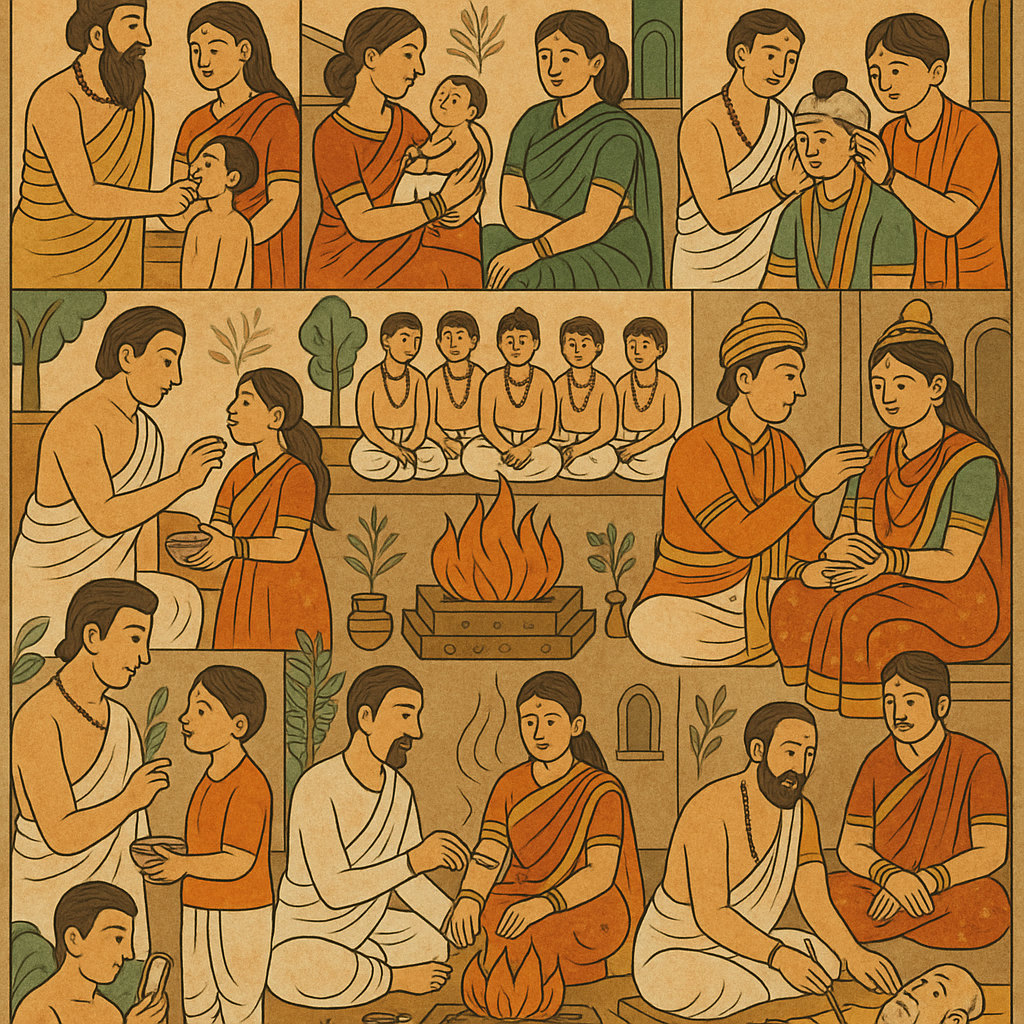
In Eastern civilization and the Vedic tradition, the Shodasha Sanskara (Sixteen Sacraments) are a series of religious, social, and spiritual rites performed at various stages of human life. These sacraments aim to sanctify, discipline, and give purpose to human existence. They are not just rituals but transformative processes that nurture individuals and society toward a higher, more refined state.
The term ‘Sanskara’ literally means refinement, purification, or perfection. According to Vedic philosophy, every human being has innate divinity, and these Sanskara serve to awaken and cultivate that divine potential.
List of the Sixteen Sanskara
The traditional Sixteen Sanskara are as follows:
Garbhadhana (गर्भाधान संस्कार) (Conception Rite)
Punsavana(पुंसवन संस्कार) (Fetus Protection Rite)
Simantonnayana(सीमन्तोनयन संस्कार) (Parting of Hair Ceremony)
Jatakarma (जातकर्म संस्कार)(Birth Rite)
Namakarana (न्वारान संस्कार) (Naming Ceremony)
Niskramana (निष्क्रमण संस्कार) (First Outing)
Annaprashana (अन्नप्राशन संस्कार) (First Solid Food Feeding)
Choodakarma (चूडाकर्म संस्कार) (First Hair-Cutting)
Karnavedha कर्णभेदन संस्कार)(Ear-Piercing)
Vidyarambha (विद्यारम्भ संस्कार) (Beginning of Education)
Upanayana (उपनयन/व्रतबन्ध संस्कार) (Initiation into Student Life)
Keshanta (केशान्त संस्कार) (First Shaving of Beard)
Samavartana (समावर्तन संस्कार) (Graduation Ceremony)
Vivaha (विवाह संस्कार) (Marriage)
Vanaprastha (वानप्रस्थ संस्कार) (Retirement into Forest Life)
Antyesti (अन्त्येष्टि/मृत्यु संस्कार)- Mrityu Sanskara (Last Rites/Funeral Ceremony)
Brief Explanation of Each Saṁskāra
Garbhadhana (Conception Rite)

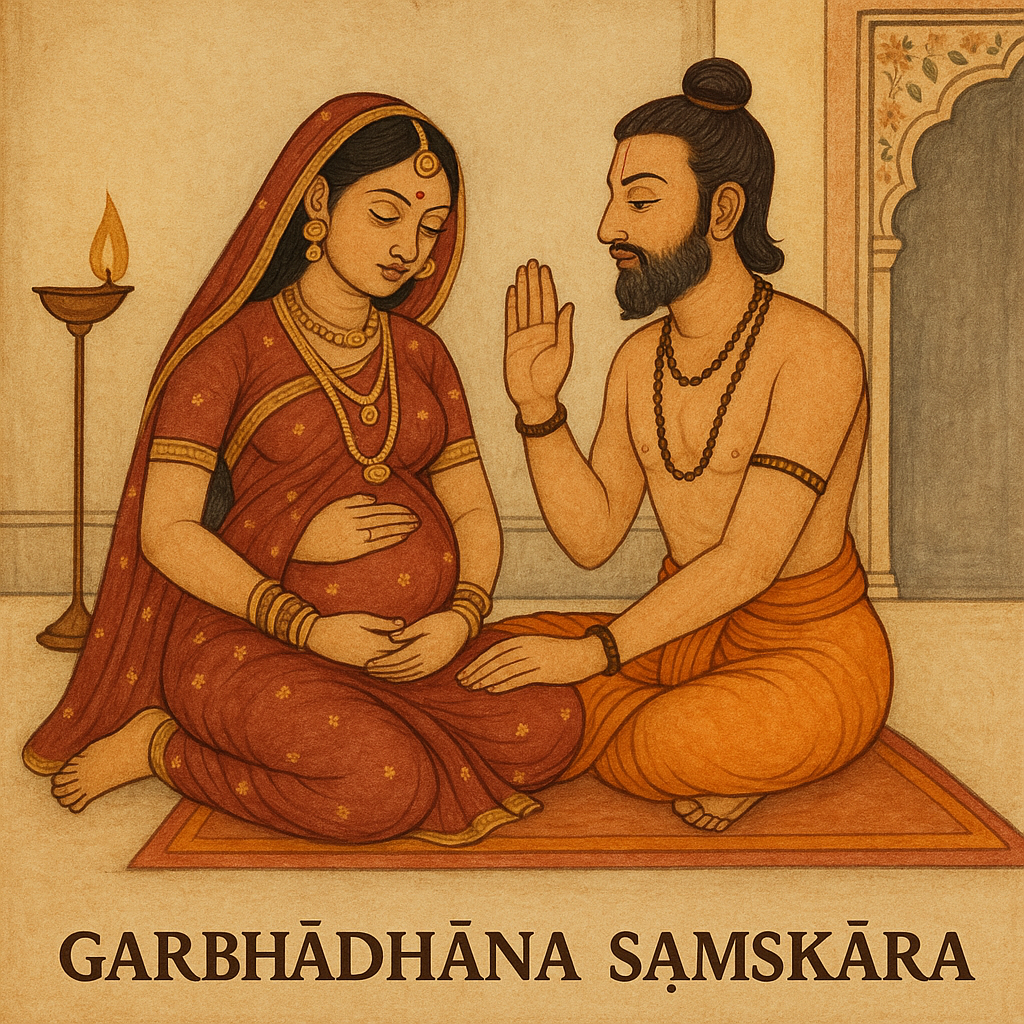
Performed after marriage with the desire to conceive a virtuous child.
Involves prayers and rituals to invoke purity and divine blessings for conception.
Punsavana (Fetus Protection Rite)
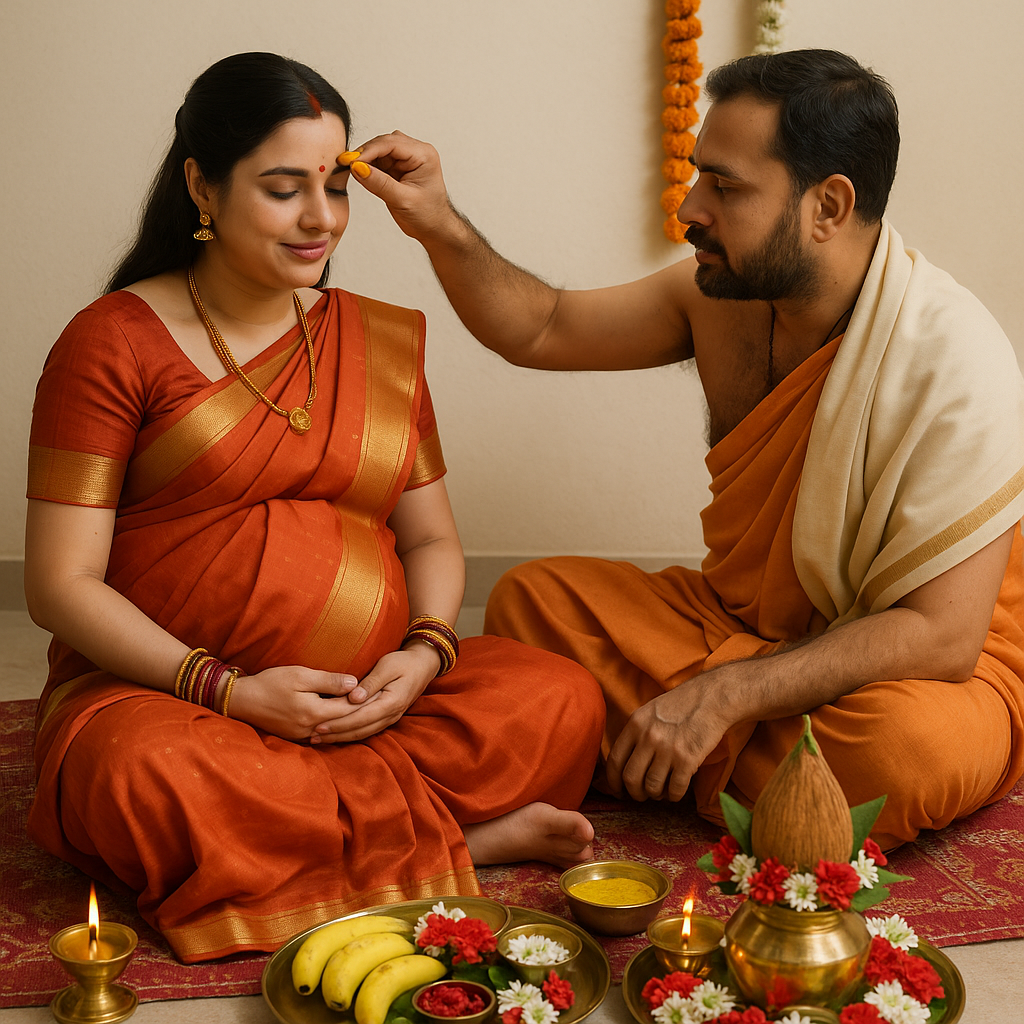
Conducted during the third month of pregnancy.
Aims to ensure the healthy development of the fetus with positive influences.
Simantonnayana (Parting of Hair Ceremony)
Performed during the seventh month of pregnancy.
Focuses on the mental well-being of the mother and protection of the unborn child.
Jatakarma (Birth Rite)
The first ritual after a child’s birth.
Includes whispering sacred mantras and giving honey and ghee to the newborn.
Namakarana (Naming Ceremony)
Conducted on the 10th, 11th, or 12th day after birth.
The child is given a meaningful and auspicious name.
Niskramana (First Outing)
The first ceremonial outing of the child to see the sky, moon, or sun.
Annaprasana (First Solid Food Feeding)
The child is fed solid food (usually rice pudding) for the first time.
Choodakarma (First Hair-Cutting)
The child’s hair is shaved for the first time.
Symbolizes purification and health benefits.
Karnavedha (Ear-Piercing)
Piercing the child’s ears for health, beauty, and spiritual energy activation.
Vidyarambha (Beginning of Education)
Formal commencement of education and learning under a teacher’s guidance.
Upanayana (Initiation into Student Life)
A sacred thread ceremony symbolizing the start of disciplined student life.
The student receives the Gayatri Mantra from the guru.
Keshanta (First Shaving of Beard)
Performed at puberty to mark the transition into early adulthood.
Samavartana (Graduation Ceremony)
Marks the completion of formal education and readiness to enter society.
Vivaha (Marriage)
A sacred union for beginning the householder phase of life.
Vanaprastha (Retirement into Forest Life)
Gradual withdrawal from worldly duties, focusing on spiritual pursuits.
Antyesti- Mrityusanskara (Last Rites)
Funeral rites performed after death.
Aims to assist the soul’s journey to the next stage and dissolve the body back into the five elements.
Purpose of the Shodasha Sanskara
Physical, mental, and spiritual purification.
Development of character and responsibility at every life stage.
Promotion of social and cultural values.
Providing spiritual guidance and direction throughout life.
Cultural Significance of the Sanskara
Enhancing individual and societal excellence: Saṁskāras teach virtues, discipline, and nobility.
Preserving traditions and faith: They keep spiritual and cultural heritage alive across generations.
Spiritual advancement: They help individuals walk the paths of Dharma (righteousness), Karma (duty), and Mokṣa (liberation).
Conclusion
The Shodasha Sanskara are not merely ritualistic ceremonies; they are deeply philosophical and psychological systems designed to refine human life at every critical stage. They guide an individual toward a purposeful and harmonious existence while reinforcing societal strength and spiritual elevation. Even in today’s modern world, practicing these Sanskara with true understanding and reverence can nurture a more conscious, noble, and enlightened society.
Shodasha Sanskara: The Sacred Journey of Life (Expanded with Scriptural References)
Introduction
In the Vedic tradition, life is seen as a sacred opportunity for spiritual evolution. To guide and sanctify human life, the ancient seers prescribed Shodasha Sanskara— Sixteen Rites of Passage — detailed in the Vedas, Gṛhya Sootras, Smriti and Dharmashastra texts.
The Rigveda (Rigveda 10.85.36) states:
“Yajno vai shreshthtamam karma”
(Sacrifice or sacred actions are the highest forms of karma.)
Thus, every important transition in life is marked with a saṁskāra, aiming to connect the individual to the divine order (Ṛta).
List and Scriptural Basis of Shodasha Sanskara
Garbhadhana (Conception Ritual)
Objective: Purify the act of conception for noble progeny.
Reference: Āśvalāyana Gṛhya Sūtra 1.13
Mantra: Invocation to Agni and Prajāpati for blessing the union.
Example prayer:
“Agne garbhām dhehi”
(O Agni, instill a noble embryo.)
Pumsavana (Fetus Protection Rite)
Objective: Protection and strengthening of the fetus.
Reference: Pāraskara Gṛhya Sūtra 1.15.1
Special rituals with Soma juice or special herbs are mentioned.
Seemantonnayana (Parting of the Hair)
Objective: Mental peace and well-being of the pregnant mother.
Reference: Āśvalāyana Gṛhya Sūtra 1.16
Rigveda Mantra:
“Imam me Gange Yamune Sarasvati…” (Ṛgveda 10.75)
Blessings are invoked from sacred rivers to protect the mother and child.
Jatakarma (Birth Ceremony)
Objective: Welcoming the soul into the world.
Reference: Baudhāyana Gṛhya Sūtra 1.2
Rituals include touching the baby’s lips with honey and ghee while chanting:
“Om medhājananām, Om prāṇasya prāṇam…”
Symbolizing imparting intellect, strength, and vitality.
Nnmakarana (Naming Ceremony)
Objective: Bestowing a name reflecting divine qualities.
Reference: Manusmṛti 2.31
Name is chosen based on nakṣatra (birth star) and syllabic principles.
Names were often meaningful — e.g., Arjuna (white, pure), Sita (furrow, symbolizing agriculture and prosperity).
Niskramana (First Outing)
Objective: First exposure of the child to the external world.
Reference: Gṛhya Sūtras (various) prescribe timings (third or fourth month).
Child is shown the sun or moon, invoking protection:
“Bhadram karṇebhiḥ śṛṇuyāma devāḥ…” (Ṛgveda 1.89.8)
Annaprasana (First Feeding of Solid Food)
Objective: Initiating the child’s physical nourishment.
Reference: Āśvalāyana Gṛhya Sūtra 1.17
Child is fed with rice pudding or similar auspicious food.
Choodakarman (First Hair-cutting)
Objective: Symbolic removal of past karmic impurities.
Reference: Manusmṛti 2.35
It is linked with physical health and longevity.
Karnavedha (Ear Piercing)
Objective: Enhancing intelligence, preserving health.
Reference: Baudhāyana Gṛhya Sūtra 1.2.5
Also has subtle references in Atharvaveda about the significance of bodily orifices being spiritually energized.
Vidyārambha (Commencement of Studies)
Objective: Beginning of formal learning, both secular and spiritual.
Reference: Mentioned widely in Smṛtis.
Writing the first letter or syllable — often “Om”.
Upanayana (Initiation into Student Life)
Objective: Spiritual birth of the student; start of Brahmacharya.
Reference: Taittirīya Āraṇyaka 2.9.1
Gayatri Mantra is imparted:
“Om Bhur Bhuvah Svah, Tat Savitur Varenyam…” (Ṛgveda 3.62.10)
Students (especially in Brahmin, Kshatriya, and Vaishya castes) begin their Vedic studies after this.
Keshanta (First Shaving of Beard)
Objective: Marking entry into adulthood.
Reference: Āśvalāyana Gṛhya Sūtra 1.20
Represents control over senses (Indriya Nigraha) and passion.
Samavartana (Graduation Ceremony)
Objective: Completion of formal education; readiness to enter society.
Reference: Pāraskara Gṛhya Sūtra 2.7
Student gives guru-dakṣiṇā (offerings to the teacher) and receives life instructions.
Vivaha (Marriage)
Objective: Beginning of Gṛhastha Āśrama (householder life).
Reference: Ṛgveda 10.85 (Sūryā Sūkta) is foundational for Vedic marriages.
Blessings:
“Samrajni shvaśure bhava…”
(Be a queen in your father-in-law’s house.)
Vanaprastha (Retirement)
Objective: Gradual withdrawal from material life towards spiritual pursuits.
Reference: Manusmṛti 6.1-3
Living a simple life in forests or secluded areas for self-realization.
Antyesti (Last Rites)
Objective: Assisting the soul’s transition and releasing the body to elements.
Reference: Atharvaveda 18.2
Chant:
“Agnaye kavyavāhanāya svāhā”
(Offering to Agni who carries the offerings to the ancestors.)
Cremation symbolizes merging of body with Earth, Water, Fire, Air, and Space.
Purpose and Philosophy Behind the Saṁskāras
Purification and sanctification at every critical life stage.
Gradual progression from individual desire to universal realization.
Harmony with cosmic principles (Ṛta).
Strengthening societal bonds and spiritual discipline.
As stated in Manusmṛti 2.67:
“Sanskaarasya hi samskaaro vidyate janmanah phalam”
(The true fruit of birth lies in undergoing the Saṁskāras.)
Conclusion
The Shodasha Sanskara weave a sacred thread throughout life — from birth to death — transforming ordinary human existence into a divine journey. They are not mere rituals but profound spiritual disciplines, carefully crafted by the sages to nurture body, mind, and soul. Reviving their true spirit in modern times can offer a path toward holistic development, ethical living, and spiritual enlightenment.


